


Table of contents:
Electric vehicles no longer seem like something out of the ordinary, but the subject of charging still raises a lot of questions. More often than not, it’s not the batteries or range that confuse people, but the cables and plugs. Different names, standards, charging speeds and compatibility – it all easily turns into a muddle in your head, especially if you’re just starting to look into buying an EV.
In fact, EV plug types aren’t about complex engineering, but about how your car ‘communicates’ with the charging station. The type of connector determines where you can charge your car, how quickly it will charge, and whether you’ll need adaptors. In Europe (and in Ukraine too), the situation has more or less stabilised, so it’s much easier to get to grips with than it seems at first glance.
We remind you that you can purchase home and commercial charging stations in our online storeand also use the public charging stations ECOFACTORcharging points located throughout Ukraine. For convenient access to charging infrastructure, we recommend using our mobile applicationwhich is available on iOS and Android.
Why are there different types of EV plugs in the first place?
When the first mass-market electric vehicles appeared, there was simply no universal charging standard. Car manufacturers, energy companies and regulators developed their own solutions, tailored to the specific characteristics of their respective markets.
Different countries had varying electricity grids and voltage levels, different engineering approaches to vehicle design, and different rates of infrastructure development. Furthermore, the situation was influenced by competition between standards, as well as safety and certification requirements. As a result, several major families of connectors, specific to particular regions, emerged.
Over time, the market has begun to consolidate, and today most new cars and charging stations use a limited number of dominant standards, so the situation is considerably simpler than it was ten years ago.
Charging types for electric vehicles: AC, DC and power levels
Before delving into EV plug types, it is important to understand the basic principle: all connectors are designed for two charging methods – alternating current (AC) or direct current (DC). It is the type of current that determines the speed of the charging process, the complexity of the equipment and the usage scenarios.
AC charging (alternating current)
This is the main method of day-to-day charging used by most electric vehicle owners. Electricity is supplied from the grid as alternating current, and is converted to direct current inside the vehicle itself.
This type of battery has a lower capacity and takes longer to fully charge, but it is well suited for use at home, at work or during long periods of inactivity, and does not require complex infrastructure.
AC comprises two common levels:
- Level 1 – charging from a standard domestic socket
- Level 2 – charging from a home wallbox or public AC charging points
A typical scenario is when a car is left plugged in for a few hours or overnight.
DC fast charging (direct current)
DC charging is used when you need to top up your battery quickly, for example whilst travelling. In this case, the current is converted directly at the charging station, and the battery is supplied with direct current that is ready for use.
This format delivers very high power and significantly faster charging, but requires a more complex and expensive infrastructure, so it is usually used for short stops.
It is DC fast charging that allows the battery to be charged to around 80 per cent in 15–40 minutes, depending on the vehicle’s capabilities and the charging stations.
Charging levels: what do Levels 1, 2 and 3 mean?
The ‘Level’ designations do not refer to the type of connector, but to the speed and power of the charges.
- Level 1 – the slowest option, a standard mains socket (AC)
- Level 2 – faster AC charging at home or at public charging points
- Level 3 – fast DC charging
In Europe, these terms are used less frequently, but the logic behind the distinction remains valid.
Connector standards in Europe and Ukraine: AC and DC
In Europe, including Ukraine, charging infrastructure is already largely standardised. Most modern electric vehicles and charging stations use the same types of EV plugs, so compatibility issues do not usually arise. It is simply important to distinguish between the connectors used for everyday AC charging and fast DC charging.
AC sockets
AC sockets are designed for slower charging from AC mains, which usually takes place whilst the car is parked. It is through these sockets that electric vehicles are most often charged in residential buildings, offices, car parks or near shopping centres, where the car can remain connected for several hours.
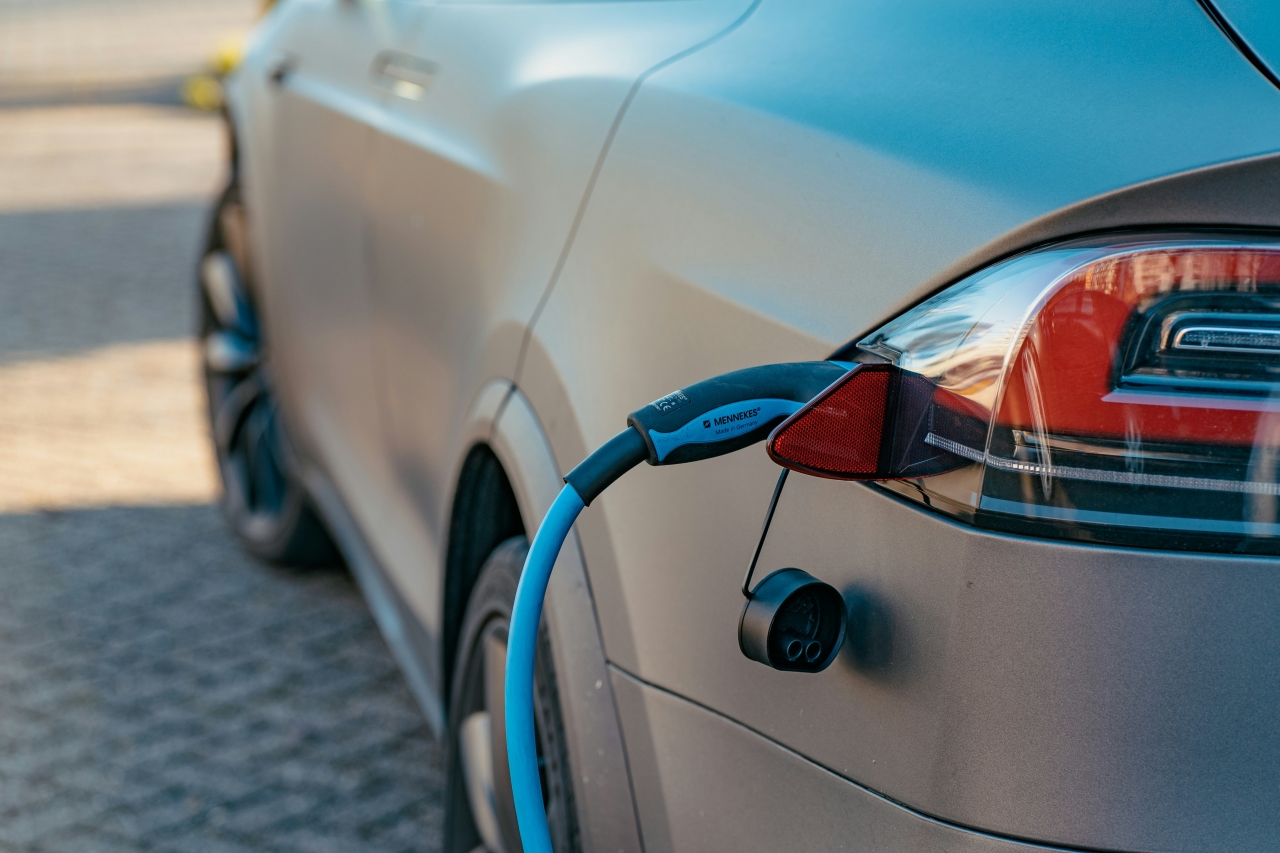
1. Type 2 (Mennekes) – the main standard
Type 2 is effectively the standard AC socket for modern electric vehicles in Europe and Ukraine. These are the sockets installed at most public charging points in towns and cities, in car parks, and near offices and shopping centres.
Main advantages:
- Support for single-phase and three-phase networks
- sufficiently high power
- cable locking mechanism
- compatibility with most new cars
- widespread use in domestic and public applications
The typical capacity is up to 11 or 22 kW for home chargers, and in some cases up to 43 kW. If you’re buying a new electric car in Europe, it’s almost certain to have this particular port.
2. Type 1 (J1772) – a less common variant
Type 1 is more commonly found in North America and Japan, but in Ukraine you can come across it on older or imported cars.
Key features:
- single-phase charging
- lower power
- the absence of a locking mechanism
To connect to European sockets, a cable or a Type 1 to Type 2 adapter is usually used.
DC connectors
DC connectors are used for high-power direct current charging when the battery needs to be recharged as quickly as possible. These connectors are mainly installed on motorways, at high-speed hubs and at stations designed for short stops during journeys.
1. CCS2 – the dominant standard
CCS2 (Combined Charging System Type 2) is the main standard for fast charging in Europe and Ukraine. It combines AC and DC in a single port: the upper part corresponds to Type 2, whilst the additional contacts at the bottom provide a direct current supply.
Advantages:
- very high-power charges
- one port for slow and fast charging
- support for most modern electric vehicles in
- the active development of network stations
The maximum charging power under the CCS2 standard can reach 400 kW and above (for example, stations with a capacity of 400–480 kW), whilst under the MCS specification it can exceed 1 MW.
2. CHAdeMO – the standard for older models
CHAdeMO was one of the first fast-charging standards and is still found on some Japanese cars.
Main features:
- a separate port from AC
- usually lower power
- support for the vehicle-to-grid function
Today, this standard is gradually being replaced by CCS2, but many stations still retain it to ensure compatibility with older cars.
Public infrastructure
Most modern charging stations in Europe and Ukraine are equipped with a standard set of connectors: Type 2 for AC charging, CCS2 for fast DC charging, and sometimes also CHAdeMO for older car models. High-speed charging points often have several cables installed at once, so drivers don’t need to worry about which one to choose – they simply need to plug in the connector that matches their car.
EV plug types in Ukraine
In Ukraine, the charging infrastructure is generally being built to European standards, but due to the large-scale import of electric vehicles from various countries, the situation is considerably more varied. For slow AC charging, the Type 2 connector is most commonly used – this is the one you’ll see at most modern charging stations near residential buildings, offices, shopping centres or in car parks. However, many cars imported from the USA have a Type 1 (J1772) port, so their owners usually use their own cable or a Type 1 to Type 2 adapter.
As far as fast charging is concerned, the main standard here is CCS Combo 2 – modern motorway charging stations and most new electric vehicles on the European market are equipped with this. At the same time, there are still a great many Nissan Leafs with CHAdeMO connectors in Ukraine, so this standard is also frequently found at fast-charging stations. In recent years, GB/T connectors have also begun to appear, in line with the growing number of electric vehicles from China.
Tesla is a case apart. Most of these cars in Ukraine are imported from the USA, so they have the standard American charging port and are charged via adaptors. European versions of the Tesla, on the other hand, use the CCS2 standard and can be connected to local charging stations without any additional equipment. Due to this diversity in the origins of electric vehicles, many fast-charging hubs are equipped with several types of connectors so that virtually any car can pull up and charge.

How to check whether your car is compatible with the charging infrastructure
The issue of EV plug types becomes a practical consideration immediately after purchase or even whilst you’re still choosing an electric vehicle. It’s important to understand what type of plug the car has, how quickly it can be charged, and whether you’ll need any additional accessories.
The easiest way to identify the type of connection is to look at the charging port, which is usually located where the fuel cap would be on a standard car. If you’re just choosing a model, it’s worth paying attention to the manufacturer’s instructions, technical specifications, photos or description of the port, as well as support for fast charging and maximum power. This is important because even cars with the same connector can charge at different speeds.
Complete incompatibility with the charging infrastructure is rare. In many cases, the problem can be resolved by using a suitable cable or adapter, which allows you to use other AC charging points, charge a Tesla on third-party networks, or connect to older standards. For fast DC charging, such solutions are used much less frequently due to the complexity of the technology.
What to look out for when choosing an electric vehicle
If you’re just planning to buy a car, it’s worth considering not only the car itself, but also the availability of charging points.
Key criteria:
- connector standard
- Support for fast DC charging
- maximum AC power
- the option of home charges
- Availability of stations in your area
For Europe, the most versatile combination today is Type 2 for AC and CCS2 for fast DC charging. It ensures maximum compatibility with public infrastructure and future-proofing.

ECOFACTOR as an infrastructure platform for different types of EV plugs
At ECOFACTOR, we view the topic of EV plug types not as a technical detail, but as a key factor in driver convenience. Different plug standards should not complicate life or restrict routes. That is precisely why we are developing a comprehensive ecosystem of solutions that enables electric vehicles with different connection types to be charged throughout Ukraine – from everyday city journeys to long-distance trips.
Charging stations for different scenarios
Modern infrastructure must support the most widely used charging standards, and we take this into account in our design. Our AC and DC charging stations are installed in residential complexes, business centres, car parks, near shopping centres and along motorways. This means drivers don’t have to worry about compatibility – they simply need to drive up to the nearest charging point and connect using the appropriate cable.
Online shop for adaptors for any connector
In addition to public infrastructure, it is important to have solutions for home or private use. Our online shop offers chargers, cables, adaptors and accessories that help adapt your car to Ukrainian conditions, regardless of the port standard. This is particularly relevant for imported cars, which may use less common EV plug types.
A platform for operators and network development
We don’t just work with end users. Our software platform helps operators manage charging stations, monitor load, configure tariffs and scale the network. Thanks to this, the infrastructure becomes predictable and stable, which is critically important in an environment with multiple connection standards.
Mobile application for drivers
To help drivers easily navigate the charging infrastructure, we are developing a mobile app for iOS and Android. Through it, you can access a map of charging stations across the country, check the availability of charging points, start charging and plan your journeys. With so many different types of EV plugs around the world, this app effectively acts as a guide to the charging infrastructure, answering most of your questions before you even leave home.
Conclusion
The world of EV plug types may seem complicated at first glance. In reality, it all boils down to a few key standards and two types of charging, which are already well established on the market. In Europe and Ukraine, the situation is particularly straightforward: most modern electric vehicles are compatible with Type 2 for everyday charging and CCS2 for fast charging. This means that drivers don’t need to constantly worry about connectors or carry a set of cables with them just in case.
The most important thing is to know your car’s capabilities and understand where you plan to charge it most often. After a few journeys, the process becomes as routine as plugging your smartphone into a charger. The infrastructure continues to develop, standards are gradually being harmonised, and the issue of compatibility is becoming less and less of a concern for the average user. Driving an electric car doesn’t require any specialist knowledge, just a bit of understanding to get started.
Frequently asked questions
1. Can you charge any electric car at any charging station?
Not always, but in most cases, yes. If the car’s socket complies with the standard or there is a suitable cable or adapter, there won’t be any problems. The most restrictions apply to fast DC charging, where the standards are stricter.
2. Which plug is the most common in Europe and Ukraine?
Type 2 is used for slow charging, whilst CCS2 is used for fast charging. These are the standards found on most modern cars and at public charging stations.
3. Do electric vehicle owners need adapters?
In most cases, no, especially if the car was bought for the European market. Adapters may be needed for imported cars or when using non-standard charging points.
4. Why isn’t fast charging available at all charging points?
DC charging stations require significantly more power from the electricity grid, more complex equipment and more expensive infrastructure. They are therefore usually installed along motorways or at major transport hubs.
5. Does frequent use of fast charging damage the battery?
Modern batteries and control systems are designed for fast charging, but for everyday use, manufacturers usually recommend AC charging. This helps to preserve the battery’s lifespan.
6. Will the charging standards change in the future?
The industry is moving towards standardisation, so it is unlikely that any fundamentally different connectors will appear. Instead, the power output of charging stations, charging speeds and user-friendliness will continue to improve.