


Table of contents:
The Volkswagen ID.4 is gradually becoming a familiar sight on Ukrainian roads. Some people choose it for its spacious interior and comfort, others for its electric traction and the ability to save on fuel. But regardless of the reasons for the purchase, sooner or later, everyone faces the issue of charging. In Ukraine, electric car owners face special realities: from unstable infrastructure to different levels of service at stations. […]
In Ukraine, electric car owners face special realities: from unstable infrastructure to different levels of service at stations. In this article, we’ll look at how fast the ID.4 charges, what affects this time, how much it costs to charge, and how to make the most of your car every day.
We remind you that you can purchase home and commercial
Charging capabilities ID.4
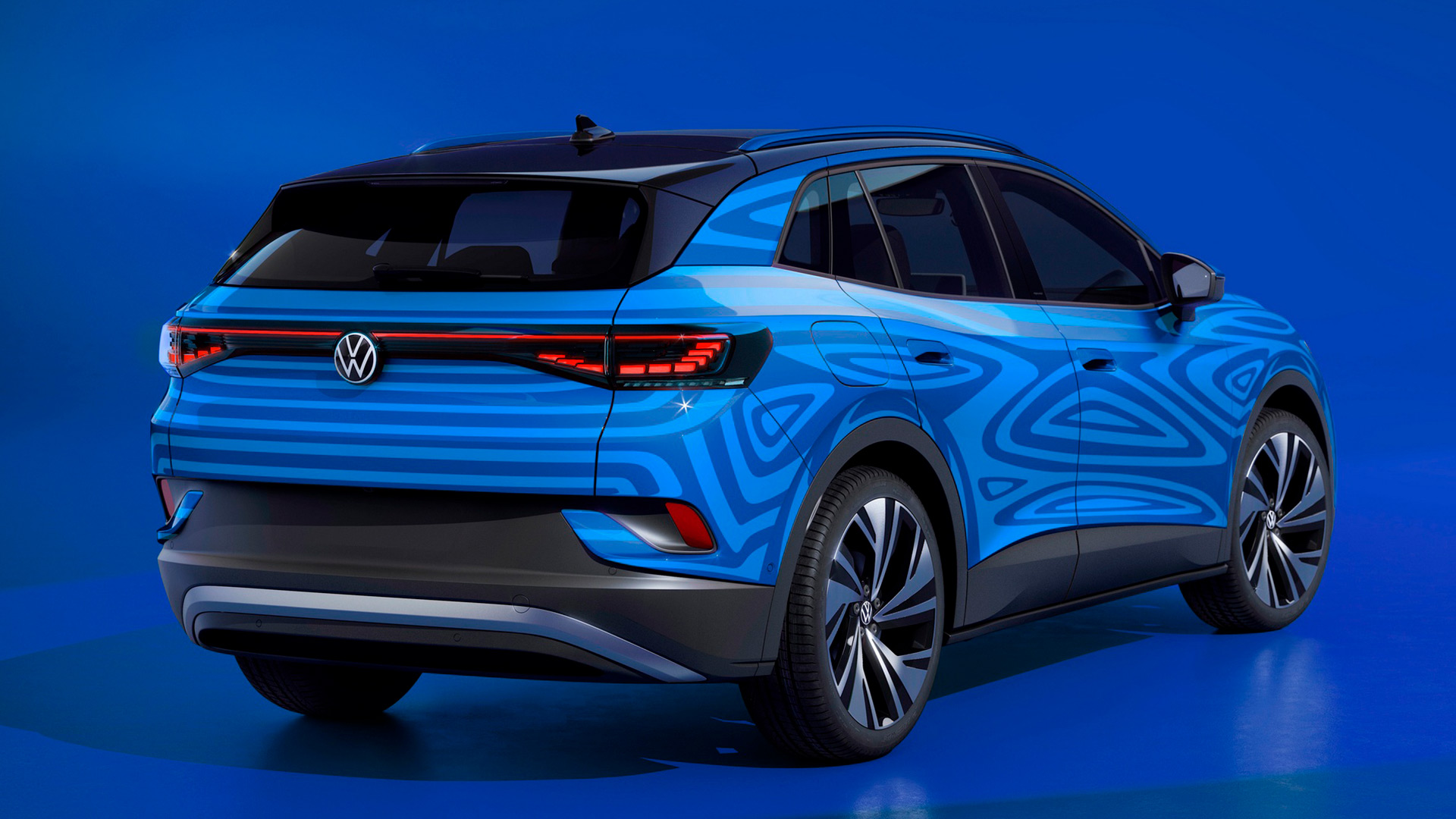
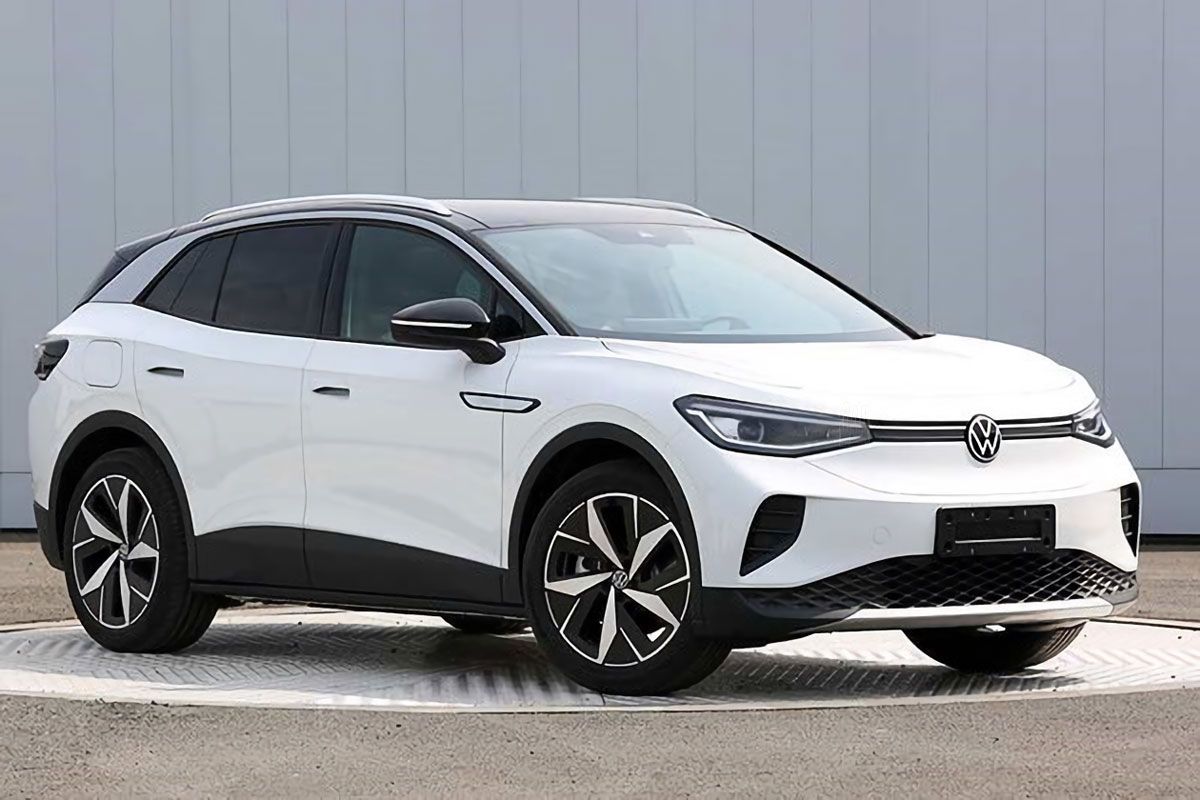
The Volkswagen ID.4 is available in two different versions – rear-wheel drive and all-wheel drive. Each of them supports both alternating current (AC) and direct current (DC) charging, allowing you to charge both at home and on the road.
Battery ID.4
At the heart of any version of the ID.4 is a lithium-ion battery with a capacity of 52 to 77 kWh. The standard version has a range of approximately 340 km, with extended configurations reaching up to 500 km. This is enough for both daily city driving and trips out of town without constantly searching for a power outlet.
How long does it take to charge the ID.4?
Charging AC (level 2): the daily routine
When it comes to charging with alternating current (AC), which is what most drivers do at home or at work, the ID.4 supports up to 11 kW. This means that it takes approximately 7 to 11 hours to fully charge the 77 kWh battery, depending on the type of charging. If you use a 7.2 kW charger, expect up to 11 hours. If you have access to an 11 kW charger, 7-8 hours will be enough. For many people, this is simply part of their nightly routine: they plug in in the evening and drive away in the morning with a full charge.
DC charging: fast, but with a twist
When it comes to fast charging with direct current (DC), the ID.4 supports up to 175 kW, although stations with this capacity are not available everywhere in Ukraine. In good conditions, charging from 10 to 80% takes about 30 minutes. This is convenient when you are on the road and need to quickly replenish your energy supply. But it’s important to remember that charging slows down as you get closer to 80% – this is a normal process to avoid overheating and battery wear. So if the goal is to quickly recharge while travelling, it is better not to wait for a full charge, but to stop at 70-80% and continue on.
Practical nuances for ID.4 owners
Understanding the finer points of charging the ID.4 isn’t just about figures in kW or minutes. It’s about convenience in everyday use, battery longevity and comfort on journeys. Developing the right charging habits can significantly enhance your experience of owning an electric vehicle in Ukraine.
Here are a few practical tips to help you better adapt to the features of ID.4 charging:
How to improve charging efficiency
- Preheating of the battery: If you charge in winter without preparation, the process can be noticeably slower. It is therefore worth using the battery warm-up function before charging to improve the speed and reduce energy loss in the cold season.
- Optimal charge level: Continuous charging to 100% may have a negative impact on battery life. If you are not planning a long trip, it is better to limit the charge to 80%. This is the golden mean between convenience and battery life.
- Use the charging timer: If you have a charging station at home or in a car park, use the delayed start function. Charging at night is not only cheaper (if you have a nighttime tariff), but also takes place at a lower temperature, which is better for the battery.
How to use fast charging correctly
- Don’t overuse DC charging: Yes, the ID.4 can be charged quickly – up to 175 kW – but if you use DC charging every day, this can lead to faster wear and tear on the battery cells over time. For day-to-day use, it’s better to rely on AC charging.
- Plan your route in advance: When travelling long-distance, it’s good to know where you can recharge quickly. Apps such as PlugShare or ECOFACTOR show you the stations along the route, their capacity and even their occupancy in real time.
- Combining with stops: The best time to charge is during lunch or coffee. If you need 30-40 minutes to recharge, use this time to rest. This makes the stop itself less noticeable in the schedule.
How to save battery life
- Avoid extreme charge levels: Riding with the battery at 100% or 0% all the time is not a good idea. It is best to keep the level between 20-80% in everyday use.
- Temperature mode: Try not to leave the car in direct sunlight or in extreme cold for a long time. If possible, park in the shade, under a canopy or in a garage.
- If you are not going to use the car for a long time: Ideally, you should keep the battery at 50–60 per cent charge and check the charge level from time to time. It is also advisable to avoid leaving the car stationary for long periods – even minimal use helps to keep the system in good working order.
By implementing these simple tips into your daily routine, you can significantly improve your ID.4 ownership experience. This not only increases convenience, but also helps to preserve the life of the car for longer, which is especially important in the conditions of the Ukrainian market and infrastructure.
How much does it cost to charge the Volkswagen ID.4?
For Ukrainian ID.4 owners, understanding the cost of charging is not just a matter of curiosity, but part of their daily planning. This section provides specific figures and examples to help you understand the costs of charging an electric vehicle in Ukraine.
Charging at home
Most drivers charge their cars at home, and the ID.4 is no exception. If you have a 7.2 kW or 11 kW home charger installed, a full charge takes 8 to 11 hours depending on the battery configuration.
- Average price of electricity: As of September 2025, the average tariff for residential consumers is approximately UAH 2.64 per 1 kWh.
- Battery capacity: The basic version of the ID.4 has a 52 kWh battery, with 77 kWh in the higher end models.
- Calculation of the cost: Charging 52 kWh = approx. 137 UAH (52 × 2.64 UAH), charging 77 kWh = approx. 203 UAH (77 × 2.64 UAH)
Charging at public stations
Charging at home is the most cost-effective option, but public charging points are indispensable when travelling or for those who do not have their own charging point. In Ukraine, the cost of public charging depends on the type of charging point and the operator.
- Tariffs per kWh: Most grids charge for electricity consumed. AC stations: on average 5-7 UAH/kWh, DC stations: usually 8-12 UAH/kWh.
- Calculation of the cost: If you charge an ID.4 from 10% to 80% (about 54 kW) at a DC station at 10 UAH/kWh, it will cost about 540 UAH (54 × 10 UAH).
How to reduce charging costs
To save money on ID.4 charging, you can use the following approaches:
- Nightly rate at home: Many electricity suppliers offer reduced rates at night. Charging during these hours can save you up to 40% compared to the standard rate.
- Subscriptions or subscriptions: Some charging network operators in Ukraine (e.g. TOKA or AutoEnterprise) offer subscription packages with a lower price per kWh or a fixed amount for a certain number of sessions.
- Promo and special conditions: ID.4 holders can get preferential terms in partner networks. For example, when purchasing a car or having it serviced at an authorised dealership, they sometimes offer promotional codes or free access to a certain number of charges.

Everything you need to charge your Volkswagen ID.4 – our approach at ECOFACTOR
At ECOFACTOR, we are working to ensure that charging an electric car in Ukraine does not become a quest. Through our app for
Charging stations We design and manufacture our own chargers in Ukraine, so we can adapt to local conditions and needs. We have more than 18,000 AC and DC stations in our network, and more than 3,500 active charging ports are connected to the ECOFACTOR platform. All this is available through the ECOFACTOR app for iOS and Android, where you can not only start charging, but also track your expenses, check the status, see map of charging stations and even use roaming within partner networks.
We’d like to draw your attention to our online store, whichstocks all the necessary accessories: cables, adaptors, mounts, RFID cards, adaptors and other equipment for charging at home or at your business premises. We can also help you choose a mobile or fixed charging station tailored to your specific needs – for example, for a residential complex, a café or a private garage.
For businesses, we offer an operator platform that allows you to manage your charging network, set tariffs, see energy consumption and create a convenient billing system for customers. This can be especially useful for shopping malls, hotels, office centres or developers who want to provide high-quality charging services on their territory.
We don’t just install charging stations – we’re building a fully-fledged ecosystem for electric vehicles in Ukraine. Whether you already own an ID.4 or are just planning to switch to an electric vehicle, ECOFACTOR is a platform that makes charging simple, fast and hassle-free.
Conclusions.
Charging the Volkswagen ID.4 in Ukrainian conditions is not a complicated science if you know the basics. You can charge your car at home at night and spend less than you would for lunch in a café. You can use fast charging while travelling and still have time for a coffee. You can choose a station, cable, tariff, and even manage it all from your phone using the app. It’s no longer exotic – it’s the new normal, and it’s becoming more convenient every month.
And most importantly: charging isn’t just a figure in kilowatts. It’s about comfort on the road, saving time and money, and even a little peace of mind when you know everything’s working. Here at ECOFACTOR, we help make this process clear, accessible and reliable. And the ID.4 is a brilliant example of how an electric car can fit seamlessly into everyday life without any unnecessary hassle.
Frequently asked questions
Can I charge the ID.4 at home from a regular outlet?
Yes, but it’s slow. If you charge from a 220V household outlet, it can take more than a day. For daily use, it is better to have a wall-mounted AC station of at least 7.2 kW.
How many kilometres can you really drive after 30 minutes of charging?
It depends on the type of charging. If you are connected to a fast DC station, you can get 200-250 km of range in half an hour. But this is under ideal conditions and if the battery is very low.
Do I need to charge the 100% every time?
No. The 70-80% is sufficient for daily use. This not only reduces battery wear, but also saves charging time.
What should I do if the station indicates 175 kW, but charging is slower?
It happens. The charging speed depends not only on the station, but also on the battery temperature, its charge level, and even on the load on the network. If the car is already charged to 60-70%, the speed automatically drops.
Are there any apps to see charging stations?
Yes. For example, the ECOFACTOR app for iOS and Android allows you to find stations on a map, see their power, status, and even start charging right from your phone.
Can I charge in the rain or in cold weather?
You can, but in winter, it’s better to warm up the battery before charging, if there is such a function. And charging in the rain is safe, as the stations have appropriate protection.