

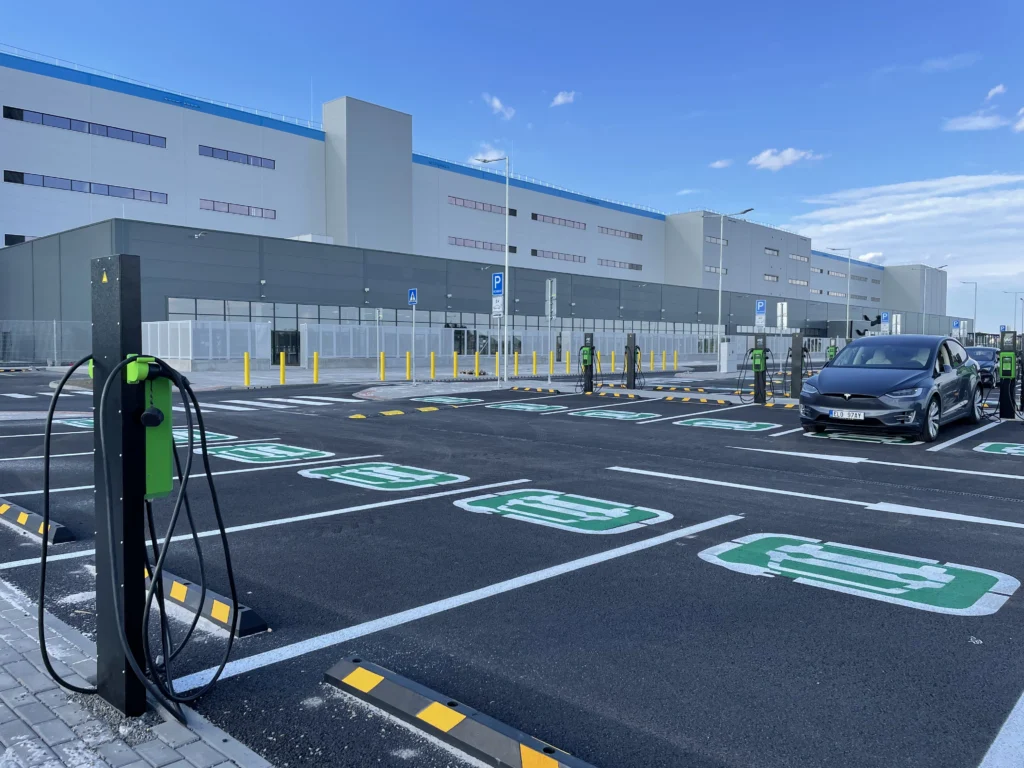
Table of contents:
When people switch to an electric car, one of the first questions they ask is: what is the difference between Level 2 charging and fast charging at specialised stations (DC fast charging), and which is better for everyday use? In short, the difference between Level 2 and fast charging at specialised stations (DC fast charging) is as fundamental as that between charging a smartphone overnight and using a 100 W fast charger. Both methods are necessary, but are used in different situations. One is for a leisurely overnight charge at home or the office; the other is for when you need to quickly top up your range whilst on the road. Let’s break it down without getting into complicated technical jargon to see how it works in practice and which option is right for you.
We remind you that you can purchase home and commercial charging stations in our online storeand also use the public charging stations ECOFACTORcharging points located throughout Ukraine. For convenient access to charging infrastructure, we recommend using our mobile applicationwhich is available on iOS and Android.
AC and DC: the basic principles without which nothing makes sense
Before discussing Level 2 versus fast charging at specialised stations (DC fast charging), it is important to understand one simple fact: an electric vehicle’s battery only works on direct current (DC). The mains supply, however, provides alternating current (AC).
In other words, AC is always converted to DC during charging. The only question is where exactly this takes place.
- For AC The vehicle itself handles the charging and conversion
- With fast charging at specialised stations (DC fast charging), the conversion takes place inside the charging station
This is a key difference that determines the speed, complexity and cost of the equipment.
Every electric vehicle has an on-board charging module. It accepts alternating current and converts it into direct current. However, its power output is limited. That is why AC charging cannot be ultra-fast.
In the case of a DC fast-charging station, it effectively does all the hard work and feeds energy directly into the battery.
Level 2 vs Fast charging at specialised stations (DC fast charging)
| Parameter. | Level 2 AC charging | Fast charging at dedicated stations (DC fast charging) |
| Charging speed | approximately 40–50 km of range per hour | up to hundreds of kilometres of range in 20–30 minutes |
| Cost of installation | relatively affordable | very high, sometimes tens of times higher |
| The cost of charging | cheaper electricity | more expensive tariff |
| Typical use: | One of the key questions facing Chevrolet Volt owners is whether they need to charge their car every day. The answer to this question depends on how you use your car. If you mostly make short journeys within the city or to work, daily charging is advisable. The Volt’s electric battery has sufficient range for such journeys, and regular charging will prevent the petrol engine from being used, thereby reducing fuel costs. | Journeys and emergencies |
| Typical installation locations | homes, offices, car parks | Motorways, transport hubs, commercial premises |
This difference clearly shows that these two types of charges do not compete with one another, but complement each other depending on the situation.
Level 2 AC charging: basic charging for everyday use
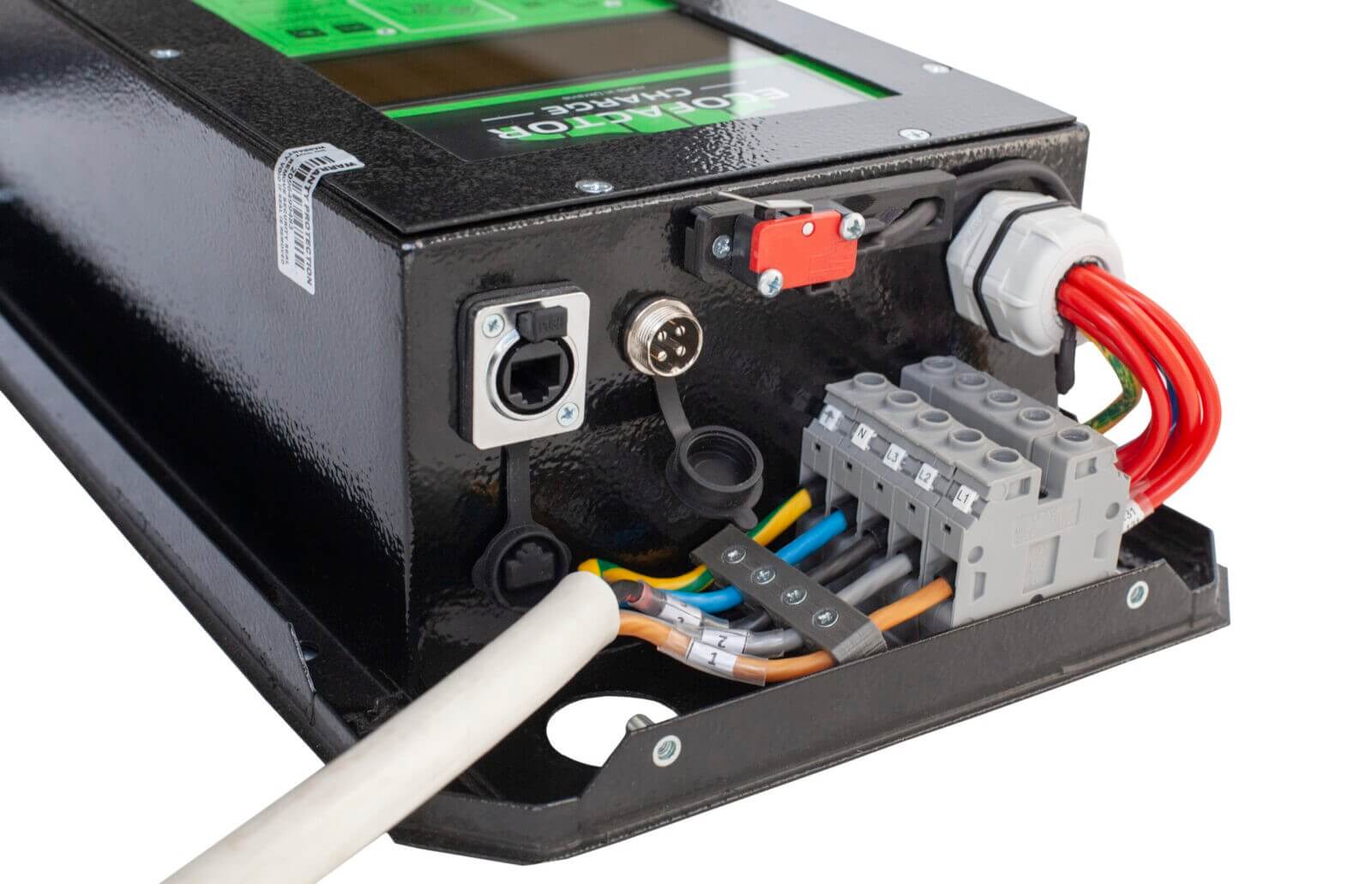
Level 2 AC charging is the most common type of electric vehicle charging in the world. It is the type typically installed at home, in offices, in residential car parks, in hotels and near shopping centres. Essentially, it strikes a balance between slow charging from a standard socket and ultra-fast DC charging stations. For most electric vehicle owners, Level 2 charging is the primary method of recharging their vehicles.
Main features Level 2
This type of charging operates on alternating current (AC) supplied from the mains. The car then converts this to direct current by means of its on-board charging devices.
Typical specifications:
- Voltage approximately 230–240 V or a three-phase supply
- Power ranging from approximately 3.7 to 22 kW
- Charging via the car’s built-in module
In real-world conditions, this means that the car gains a range of around 40–50 km in one hour, sometimes more depending on the model. A full charge can take between 4 and 10 hours, or longer if the battery is large.
Where is Level 2 used?
This format was designed for places where a car is left stationary for long periods, which is why it has become a cornerstone of the everyday infrastructure for electric vehicles.
These stations are most commonly installed in private homes, in the car parks of block-of-flats, in office car parks, near hotels and restaurants, in shopping centres and in municipal car parks. In effect, this is a charging system that operates whilst the car is simply parked in its usual spot.
Why Level 2 is suitable for everyday life
At first glance, this charging method seems slow, but in practice it’s almost perfect. Most drivers don’t need a full charge in 20 minutes if the car is left parked overnight or for the whole working day.
The popularity of Level 2 charging is due to its relatively low installation cost, cheaper electricity, minimal requirements for the mains supply and less strain on the battery. In addition, you can charge your car every night without having to drive to a separate charging station.
If you have access to such charging points at home or at work, many owners hardly ever use fast-charging stations. It is often said that an electric car charges whilst you are asleep or at work, and this is a fairly accurate description of the reality.
Restrictions. Level 2
Despite all its advantages, this type of charge is not a one-size-fits-all solution for every situation.
Main restrictions:
- not suitable for urgent situations
- It is not possible to quickly recharge a battery that is almost flat
- Large batteries take a long time to charge
- The speed depends on the car’s own capabilities
For example, some models are physically unable to accept more than 7 or 11 kW via AC, even if the charging station is capable of delivering 22 kW. In such cases, the actual charging rate is determined not by the charging station, but by the car’s on-board charger.
Level 2 AC charging remains the standard method of charging precisely because it fits in with the daily routine of using a car. It’s not about speed at any cost, but about convenience and reliability in the long term.
Fast charging at dedicated stations (DC fast charging): fast charging for journeys and emergencies
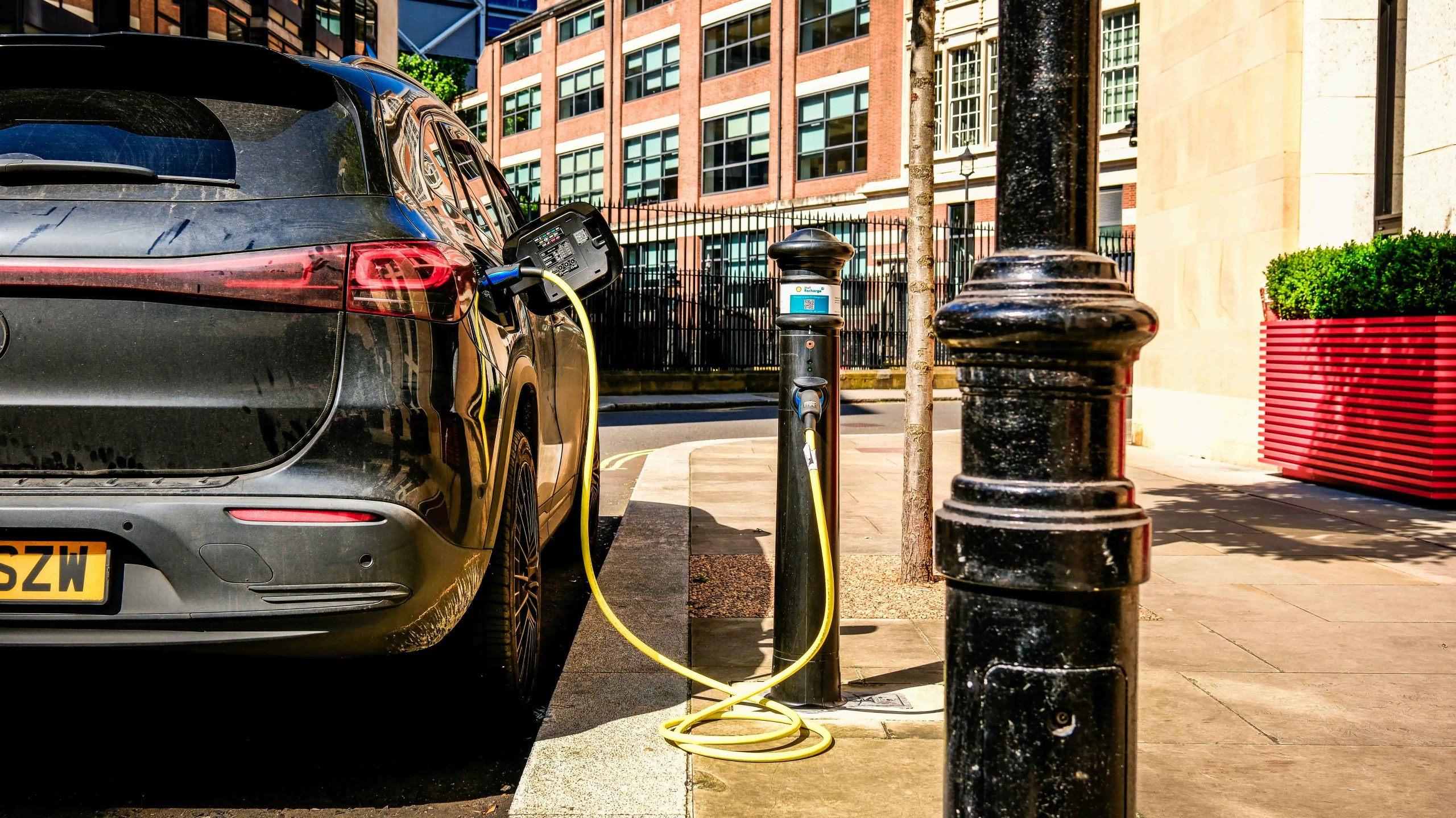
Fast charging at dedicated stations (DC fast charging) is on a completely different level compared to everyday AC charging. It is often referred to as fast or ultra-fast charging, as it allows you to top up your range in tens of minutes rather than hours.
Such stations are installed in places where vehicles stop briefly and need to continue their journey quickly, particularly on motorways, at major transport hubs, roadside complexes, urban fast-charging hubs and commercial vehicle depots. It is this infrastructure that makes long-distance journeys in electric vehicles possible.
Main features Fast charging at specialised stations (DC fast charging)
Unlike AC charging, here the battery is supplied with direct current (DC) that is already at the required voltage. The conversion takes place inside the charging stations, rather than in the car, so the charging speed is significantly higher.
Typical specifications:
- supplying direct current directly to the battery
- power output ranging from approximately 50 kW to 400 kW
- no restriction on the car’s on-board charger
- significantly higher speed compared with AC
In practical terms, this means that in 20–30 minutes you can gain a range of around 100–200 km, and many models can be charged to 80 per cent in about half an hour. Modern electric vehicles with high-power charging capability can do this even faster.
Why is DC charging so fast?
The reason for the high speed is that the station bypasses the car’s on-board charging module. It converts the electricity itself and feeds it into the battery at high power.
This requires complex power modules, cooling systems and a high-capacity connection to the electricity grid. In fact, such a station is a small power facility, rather than simply a charger.
Advantages and disadvantages Fast charging at specialised stations (DC fast charging)
It is precisely this type of charging that has made electric vehicles suitable for long-distance journeys and intensive use.
Main advantages:
- very fast recharging
- the opportunity to go on long journeys
- high-capacity stations
- of critical importance for commercial transport
- the ability to quickly resolve the issue of a low battery charge
Without networks of fast-charging stations, electric vehicles would remain primarily a form of urban transport.
Alongside the obvious advantages, there are also limitations that are important to bear in mind.
Main drawbacks:
- higher charging cost
- very expensive infrastructure installation
- a significant strain on the electricity grid
- possible impact on battery life with frequent use
- Not all cars are capable of handling high power output
In addition, the charging process slows down once the battery has reached approximately 70–80 per cent charge. This is a normal protective mechanism designed to prevent the battery from overheating and excessive wear and tear.
Fast charging at dedicated stations (DC fast charging) remains a solution for situations where speed is more important than economy or the convenience of a long-term charge. It complements everyday AC charging rather than replacing it.
ECOFACTOR: practical solutions for charging electric vehicles in Ukraine
Here at ECOFACTOR, we approach electric motoring for what it really is – an everyday, practical reality that looks different for every driver. For some, this means overnight charging at home using Level 2; for others, it means regular journeys between cities using fast charging at specialised stations (DC fast charging). Our approach is based not on abstract scenarios, but on real-world experience of using electric vehicles in the city, on the motorway, at home and for business. That is precisely why we are creating an ecosystem that covers the entire cycle – from slow, everyday charging to fast-charging infrastructure for long-distance journeys.
What we do and how it works in practice
- Charging stations alternating and direct current: We develop and manufacture AC and DC charging stations of various power ratings for home use, businesses, car parks, petrol stations and public networks. This covers both key scenarios – relaxed daily Level 2 charging and fast charging at specialised stations (DC fast charging) when time is limited.
- Map of charging stations ECOFACTOR: We maintain an interactive map of charging stations across Ukraine, showing the current status of each station. Drivers can quickly find an available station nearby, check its charging capacity and plan their route without unnecessary stops.
- Mobile app for iOS and Android: Using the app, drivers can manage their charging directly from their smartphone – start or end a session, view their history, monitor costs and use the map of charging stations. We keep the interface simple so that technology doesn’t complicate everyday life.
- Online shop for home and business: Our online shop stocks chargers, cables, adapters and accessories for electric vehicles with various connector standards. This makes it easy to find compatible equipment for home charging or commercial premises without any technical confusion.
- Solutions for operators and businesses: We offer not only equipment but also a software platform for managing charging infrastructure. It allows you to set tariffs, monitor consumption, manage access and scale the network in line with demand.
Whether you charge your car at home every night or frequently use fast-charging stations on the motorway, the charging infrastructure is becoming an integral part of the electric vehicle ownership experience. We are building it to ensure it operates reliably, predictably and without unnecessary complications for the driver.
Why faster isn’t always better
At first glance, it might seem that fast charging should replace slower charging, but in reality this is not the case. The reasons are very practical: most of the time, a car is stationary rather than on the move; slow charging is cheaper; the electricity grid cannot cope with the widespread use of DC charging stations alone; and the slow-charging format itself fits better into the daily routine. An electric car works best when it is charged regularly in small increments.
Impact on the battery: what really matters
Modern batteries are equipped with temperature and charge management systems, but the laws of physics still apply. Frequent use of high power outputs can cause the battery to overheat, accelerate its degradation and reduce its efficiency over time. That is why most manufacturers recommend using fast charging at specialised stations (DC fast charging) as a supplement rather than as the primary method of charging.

Optimal charging strategy for electric vehicles
The best approach to charging is a combined one, where both types are used depending on the situation. For everyday use, the optimal model is one where the main charging takes place via Level 2 at home or at work, whilst fast DC charging is used for journeys and emergencies. If you can set up a Level 2 home charging station, life with an electric car becomes much simpler, and the need to make a special trip to a charging point virtually disappears.
At the same time, there are scenarios where fast charging at specialised stations (DC fast charging) is essential. These include regular long-distance journeys, working as a taxi driver or in car-sharing schemes, the use of commercial vehicle fleets, the lack of home charging facilities, or situations where charging time is limited. In such cases, it is the availability of fast-charging infrastructure that determines how conveniently an electric vehicle can be used.
The electric car ecosystem only works when both options are available.
- Level 2 ensures day-to-day stability
- Fast charging at dedicated stations (DC fast charging) gives you freedom of movement
Without the former, owning an electric car becomes inconvenient, and without the latter, long-distance journeys are impossible. That is precisely why modern cities and countries are developing both areas in parallel.
Conclusion
The difference between Level 2 and fast charging at specialised stations (DC fast charging) is not just a matter of speed. These are two different methods for different usage scenarios involving electric vehicles. Level 2 is designed for leisurely daily charging where the car spends most of its time – at home, at work or in a car park. Fast charging at specialised stations (DC fast charging), on the other hand, is needed when there is no time to wait and you need to quickly top up your range whilst on the road.
The most comfortable experience of owning an electric car comes when both options are available. Slow charging ensures stability and cost-effectiveness, whilst fast charging offers freedom of movement and confidence when travelling long distances. Therefore, the question is not which is better, but how to combine these options effectively to suit your lifestyle.
Frequently asked questions
1. Can you just use fast charging and not install a home charging station?
Yes, it is possible, especially if there is a well-developed network of fast-charging stations nearby. But in the long run, it is less convenient and usually more expensive than regular charging at home or at work.
2. Does fast charging at specialised stations (DC fast charging) damage the battery of an electric vehicle?
Modern batteries are fitted with protective systems, so using fast charges once or from time to time is not a problem. However, constant high-power charging can accelerate the battery’s natural wear and tear.
3. How long does it take to fully charge the battery from Level 2?
Depending on the battery capacity and the power output of the charging stations, this can take anywhere from a few hours to a whole night. In most cases, this is enough to ensure you start your journeys each day with a full charge.
4. Why does fast charging slow down after a certain percentage?
This is normal behaviour for the battery management system. When the charge level approaches a high level, the power output is reduced to prevent overheating and preserve the battery’s lifespan.
5. Which should I choose for home use – Level 2 or a DC station?
Level 2 is almost always the preferred choice for domestic use. DC charging stations are complex, expensive and require a much more powerful mains connection, so they are primarily intended for public or commercial infrastructure.