


Table of contents:
The electric vehicle market is growing faster than the infrastructure can keep up with standardisation. Different connectors, adaptors, and the ‘fits or doesn’t fit’ dilemma – a familiar story for many drivers and charging station owners. It is precisely this problem that ChargePoint’s Omni Port technology aims to solve. Essentially, it’s a universal approach to charging, where the station itself dispenses the correct connector for a specific car. No adaptors, no separate sockets for different types of plugs, no unnecessary confusion. In short: one charging point for all. And it looks as though the future of EV infrastructure lies precisely in solutions like this.
We remind you that you can purchase home and commercial charging stations in our online storeand also use the public charging stations ECOFACTORcharging points located throughout Ukraine. For convenient access to charging infrastructure, we recommend using our mobile applicationwhich is available on iOS and Android.
What is Omni Port, in simple terms?
Omni Port is a system that enables charging stations to automatically dispense the correct connector for a specific car.
The station is not tied to a single standard and can work with different types of connectors.
At present, the technology is primarily aimed at the North American market, where several incompatible standards are used simultaneously:
- J1772 – for AC-charges
- CCS1 – for fast DC charging
- NACS (Tesla), which is becoming the new SAE J3400 standard
In Ukraine and Europe, the situation is simpler: most electric vehicles use Type 2 and CCS2 connectors. Therefore, there is less need for a universal port here, although such solutions may become relevant in the future.
For the driver, the process couldn’t be simpler: all they have to do is pull up at the station, choose a car, and the system will automatically provide the right cable.

The problem of differing standard charges and why universal solutions are becoming essential
In the early stages of EV development, each manufacturer promoted its own standard. Tesla developed its own connector, whilst other companies used CCS or J1772. As a result, a market has emerged where a single charging standard does not suit everyone.
This created several problems at once:
- Inefficient use of stations
- Loss of customers due to incompatibility
- Confusion for new EV owners
- The need to carry adaptors
- Additional costs for operators
This is particularly noticeable in public places. For example, if a car park is equipped only with CCS ports, a Tesla won’t be able to charge there without an adapter. Omni Port aims to remove this very barrier.
In recent years, many car manufacturers have announced their switch to the Tesla NACS connector. It would seem that standardisation is just around the corner. However, there are still tens of millions of cars on the roads with older ports, and they won’t disappear overnight. What’s more, the EV industry continues to evolve, and there’s no guarantee that new standards won’t emerge in the future.
Relying on just one connector is therefore a risky strategy. Omni Port takes a different approach. Rather than committing to a specific standard, it creates a universal platform that can adapt to changes in the market.
How Omni Port is transforming the driver’s experience
For the average user, the most valuable thing is the absence of stress. These days, the charging process is often fraught with uncertainty, particularly when travelling to new locations.
Common difficulties faced by drivers
At present, owners of electric vehicles have to check the type of charging port in advance, look for compatible charging stations, plan their route taking into account the available charging points, and worry about whether they’ll be able to connect without any problems.
Omni Port minimises these concerns. In the simplest scenario, charging is almost exactly like filling up with petrol: you arrive, plug in, and drive off. This is particularly important for those who are just switching to an electric car, as the complexity of the infrastructure often puts people off more than the price of the car or its range.
Why the lack of adaptors matters
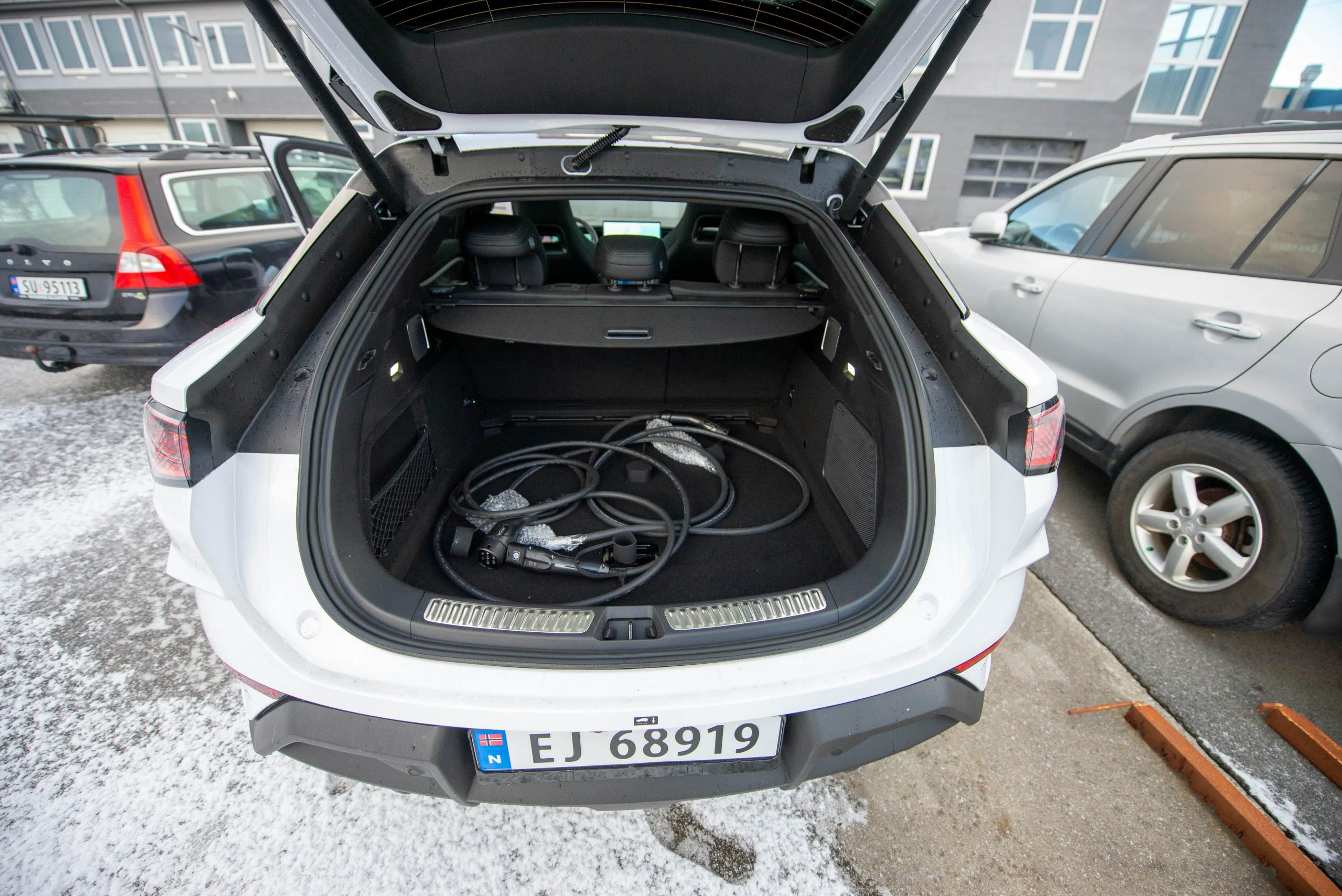
At first glance, an adapter might seem like a minor thing, but in practice it often causes inconvenience and poses risks. Adapters can get lost, break or turn out to be incompatible with a specific car model. In some cases, they limit the charging speed or raise additional safety concerns. Added to this is another simple consideration – you mustn’t forget to take the adapter with you before setting off.
Omni Port completely eliminates this problem, as it renders additional equipment unnecessary and allows you to connect without the need for any workarounds.
Advantages for charging station owners
For businesses, Omni Port may be even more important than for drivers. Charging infrastructure operators are constantly faced with a key dilemma: which standard to adopt. The wrong decision can cost thousands of dollars in investment and lead to the loss of some customers. Omni Port significantly reduces this risk, as it allows different types of electric vehicles to be charged without being tied to a single connector.
In effect, a single charging point becomes universal for all vehicles, ensuring maximum utilisation of the stations and reducing equipment downtime. It also simplifies site planning and reduces infrastructure costs, as there is no need to install separate devices or reserve parking spaces for different charging standards. For commercial property, this flexibility is particularly important, as shopping centres, hotels and business complexes are keen to serve all customers without exception, regardless of their car make.

ECOFACTOR: a practical infrastructure for charges in real-market conditions
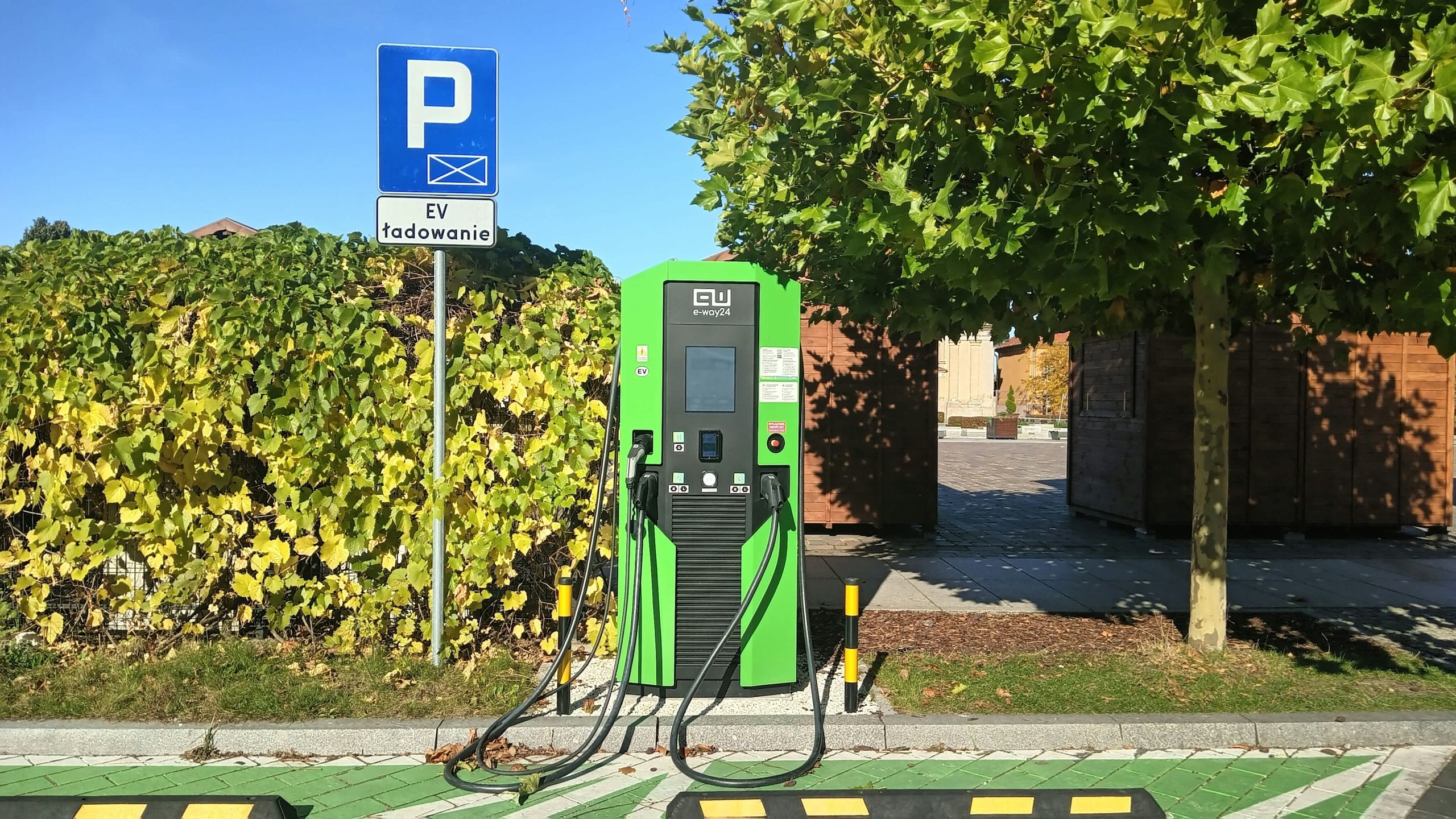
Here at ECOFACTOR, we work with electric vehicles as they exist today in Ukraine – with different connector standards, different usage scenarios and varying levels of infrastructure availability. That is precisely why the emergence of universal solutions such as Omni Port clearly illustrates the direction in which the market is heading. But whilst global standards are still taking shape, drivers need practical tools right now. We are creating an ecosystem that helps you charge your electric car every day without any hassle – at home, at work, on the road or near shopping centres. Our approach is based on a full cycle: our own charging stations, a digital platform, services for businesses and solutions for private users.
What is included in the ECOFACTOR ecosystem?
- Charging stations AC and DC: We develop and manufacture charging stations of various power ratings for private and commercial use. These solutions are designed for residential complexes, car parks, offices, petrol stations and public locations where reliable operation and user-friendly service are essential for drivers.
- Map of charging stations in Ukraine: The app features an interactive map of charging stations showing the current status of the charging points. Drivers can quickly find the nearest charging point, check availability and power output, and plan their journey without any unpleasant surprises.
- Mobile app for iOS and Android: Through the app, users can manage charging from their smartphone – start or stop a session, track usage, view their history and use the network map. We’re making it as simple as possible so that the technology doesn’t complicate the day-to-day use of the car.
- Online shop equipment: In our online shop you can pick up chargers for the home or business, as well as cables, adapters and accessories for different connection standards. This helps to avoid compatibility issues and provides a complete, ready-to-use solution all in one place.
- Solutions for operators: We offer a management platform that helps businesses monitor their network, set tariffs, manage access and scale their infrastructure in line with demand.
Modularity and future-proofing
One of the key concepts behind Omni Port is not just versatility today, but the ability to adapt tomorrow. The electric vehicle market is changing very rapidly, so the infrastructure must be able to evolve alongside it.
A modular design as the basis for a long-term solution
ChargePoint is committed to a modular approach. This means that you can upgrade a charging station without having to replace the equipment entirely, by adding new components or features as and when required. In practical terms, this helps to reduce capital expenditure, extend the equipment’s lifespan and implement upgrades without disrupting network operations, as well as reducing the amount of electronic waste. Infrastructure projects are usually planned for decades, so the ability to adapt is often more important than peak performance at the time of installation.
Conversion kits for existing stations
The ability to upgrade existing charging points plays a key role. ChargePoint offers conversion kits that add Omni Port functionality to existing equipment without the need for a complete replacement.
This is of strategic importance, as a significant proportion of the charging network has already been built and continues to be actively utilised.
The advantages of this approach are obvious:
- There is no need to dismantle the old stations
- rapid roll-out of new features
- budget savings on infrastructure
- scaling without having to rebuild the entire network
In effect, this allows the existing infrastructure to be upgraded to meet new market requirements without the need for radical and costly changes.
The impact of Omni Port on the development of the electric car industry
Charging infrastructure is one of the key factors in the widespread transition to electric vehicles. If the charging process is complicated or unpredictable, many people put off buying an EV even if they can afford one. That is why universal solutions can significantly accelerate the uptake of electric transport.
How a universal port is transforming the market
Omni Port is driving the development of infrastructure in several areas at once. It lowers the barriers to entry for new users, boosts trust in public charging networks, simplifies the scaling of infrastructure and makes the charging process more predictable.
In the long term, this brings us closer to a situation where charging an electric vehicle will be seen as a standard basic service – on a par with Wi-Fi, street lighting or parking.
Could Omni Port become the new de facto standard?
It is unlikely that the technology itself will become the sole global standard. However, the concept of a universal port stands every chance of becoming established as the main approach to building charging infrastructure.
The market is gradually moving towards multi-standard charging stations, software-controlled networks, flexible hardware platforms and the reduction of physical constraints for users. Omni Port fits in well with this approach, as it is not tied to a single type of connector but works with various standards.
Why are such technologies emerging right now?
The electric car market is entering a more mature phase. Whereas previously the main challenge was developing the cars themselves, the focus is now shifting to the convenience of their day-to-day use.
Today’s users don’t want to get bogged down in technical details. They expect a simple and intuitive experience without any extra steps or preparation. That is precisely why manufacturers of charging infrastructure are gradually moving away from highly specialised solutions and towards universal platforms capable of working with different types of vehicles and connection standards.
Restrictions. and a realistic perspective
It is important to understand that Omni Port technology is primarily aimed at North America, where there is competition between the CCS1 and NACS standards. In Europe, the situation is much simpler, as the single CCS2 standard dominates there, so the issue of compatibility is not as acute.
At the same time, Omni Port does not solve all the systemic problems facing the charging infrastructure. It does not address the shortage of fast-charging stations, does not alleviate grid overload, does not reduce the cost of electricity, and does not directly reduce charging times. However, the technology does remove one of the most frustrating obstacles for users – incompatibility between different types of connectors.
Conclusion
ChargePoint’s Omni Port shows the direction in which electric vehicle charging infrastructure is heading. The market has grown tired of having to check compatibility every time before plugging in, as a mistake can cost time or ruin a journey. The universal port does not make charging any faster in itself, but it does make it clearer and more predictable. And that is precisely what many users are lacking today.
It is also important that the decision takes into account the interests not only of drivers but also of businesses. For operators, this is a way to invest in infrastructure without fear that the chosen standard will become obsolete in a few years’ time. For electric vehicle owners, it is an opportunity not to have to worry about the technical details and to use the charging stations just as easily as any other urban service.
Whether Omni Port will become the global standard remains to be seen. But the very idea of universality already seems inevitable. If charging is to become truly widespread, it must work for everyone without exception. And in this sense, solutions like this are truly bringing electric vehicles closer to everyday use.
Frequently asked questions
1. Is Omni Port suitable for all electric vehicles?
The technology is designed to work with the main types of charging connectors available on the North American market, including CCS1, J1772 and NACS. This means that most modern models can be charged without the need for additional adaptors.
2. Do I need to use the Omni Port app to top up?
In most cases, yes, as the system identifies the vehicle and selects the correct connector via the software. However, at some service stations, you can select the connector type directly on the ‘Devices’ screen.
3. Can you upgrade old stations to Omni Port?
Special upgrade kits are available for some ChargePoint equipment, which add Omni Port functionality without requiring the stations to be completely replaced. This allows the network to be upgraded gradually, without significant capital expenditure.
4. Does Omni Port mean that adaptors are no longer needed?
In most scenarios, that’s the case. The main idea behind the technology is precisely to ensure that the driver does not have to rely on additional devices and does not have to carry them around.
5. Does Omni Port affect the charging speed?
The universal port itself does not determine the power output of the stations. The speed depends on the type of charger, the vehicle’s capabilities and the specifications of the specific equipment.
6. Is this technology relevant for Europe and Ukraine?
The CCS2 standard is predominant in Europe and Ukraine, so the need for universal ports is lower than in North America. At the same time, given the presence of imported cars with different connectors, the concept of flexible infrastructure remains relevant.