


Table of contents:
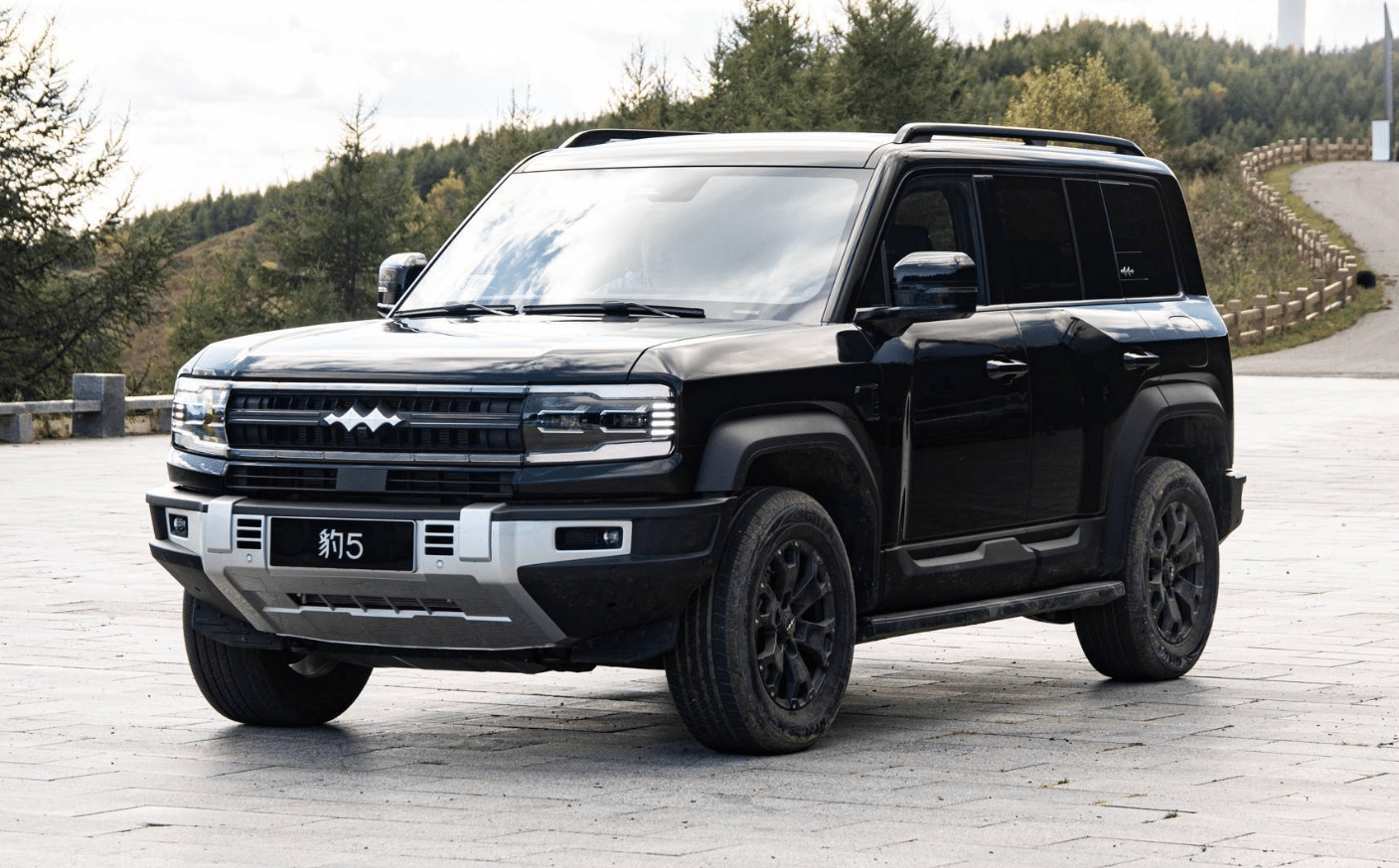
More and more new electric cars and hybrids from China are appearing in Ukraine, but the BYD Leopard 5 attracts attention in a special way. It cannot be called a typical crossover for the city. This is a body-on-frame SUV with a hybrid setup that is not afraid of difficult conditions. At the same time, it has all the technological features that we expect from a modern car.
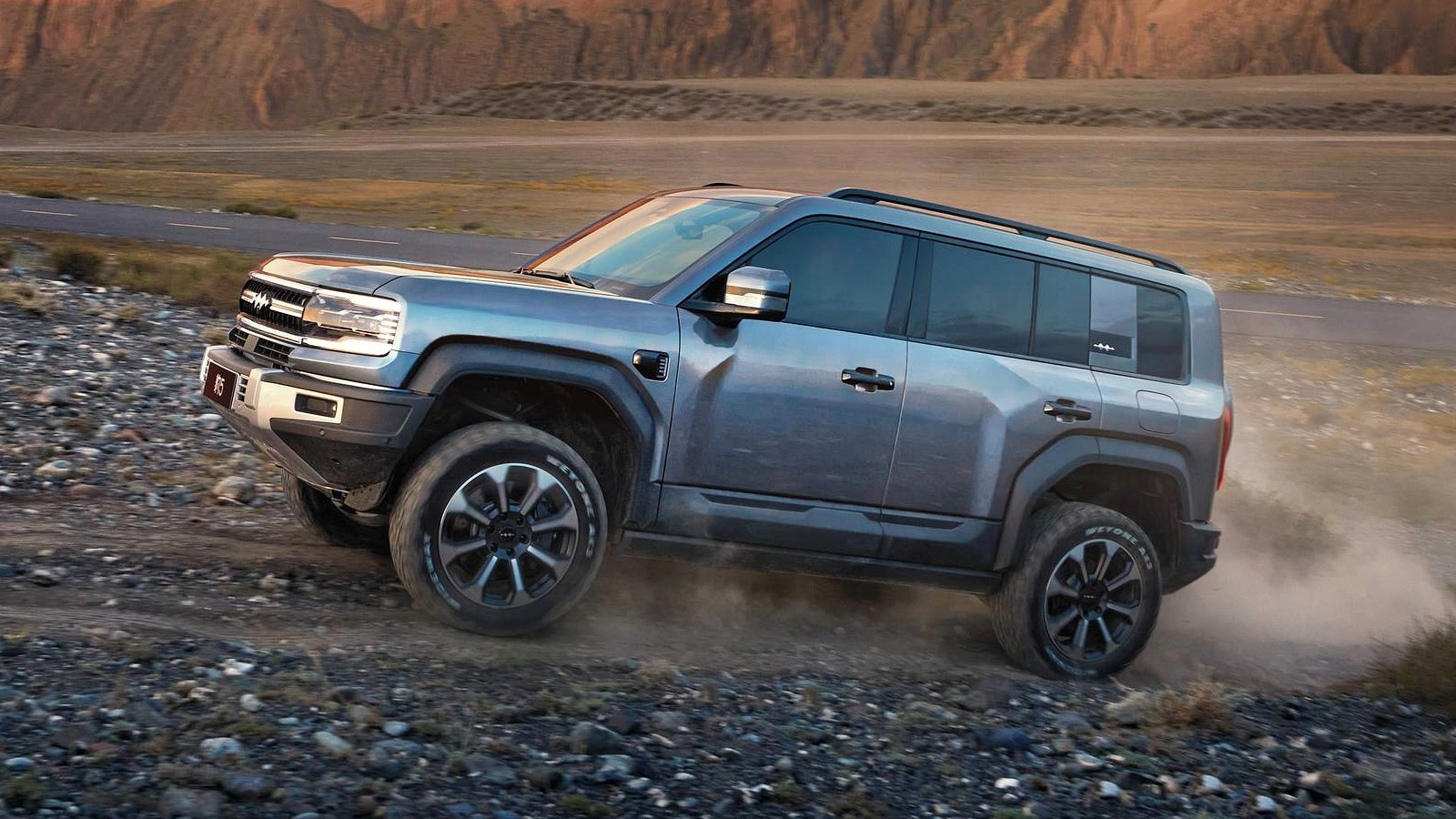
This model was released under the Fangchengbao sub-brand, which BYD created specifically for such “strong” vehicles. The Leopard 5 really looks powerful: an aggressive front end, high ground clearance, 4×4, available front and rear differential locks and electronic torque control, and a nice little feature — the car can charge other devices and equipment if necessary.
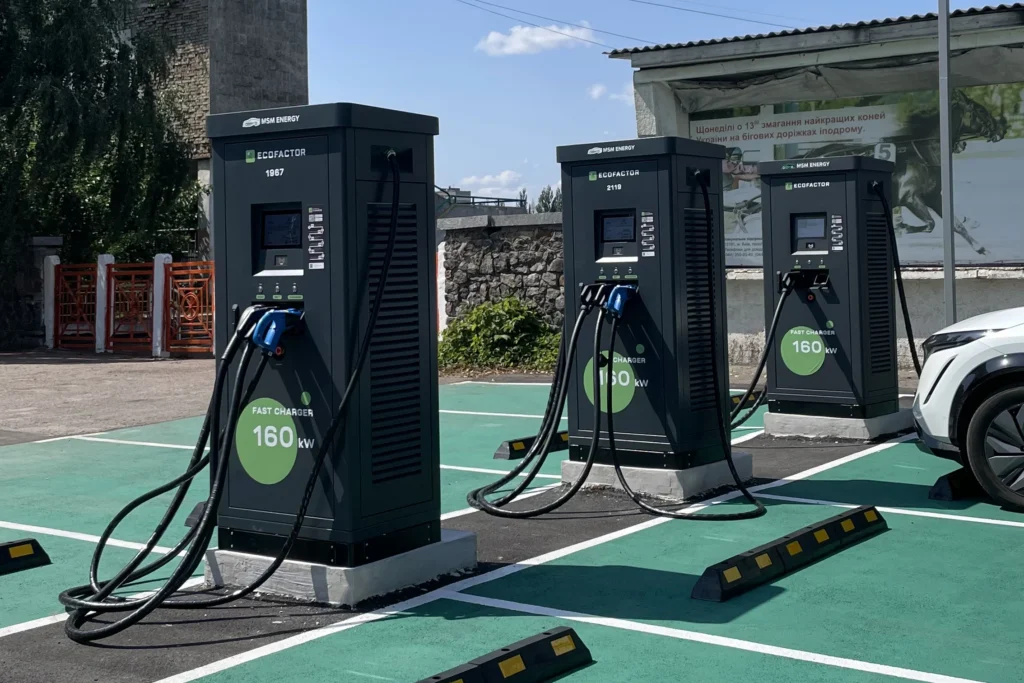
We remind you that you can purchase home and commercial charging stations from ECOFACTOR for your BYD Leopard 5.
Dimensions and weight: what you need to know
For those who are used to the dimensions of the RAV4 or Outlander, the Leopard 5 will seem bigger and more serious. It is closer to the Land Cruiser 150, but with a modern electric accent.
- Length: 4890 mm
- Width: 1970 mm
- Height: 1920 mm
- Wheelbase: 2800 mm
- Ground clearance varies by suspension configuration and selected ride height
- Kerb weight: approximately 2.9 tonnes, depending on version
- Gross vehicle weight: check the exact vehicle’s approval documents
Despite its weight, the car is quite dynamic, as we’ll discuss further.
Engine and hybrid system
The Leopard 5 uses BYD’s DMO (Dual Mode Off-road) plug-in hybrid system, combining a turbocharged petrol engine, a traction battery and two electric motors. Its hybrid architecture manages engine and electric power according to driving conditions; it is not simply an electric vehicle with a generator.
Main powertrain specifications for the 31.8 kWh version:
- Petrol engine: 1.5-litre turbocharged unit
- Two electric motors
- Total power: up to 687 PS (505 kW)
- Torque: 760 Nm
- Drive: electric four-wheel drive; front differential lock availability depends on trim
- Acceleration 0-100 km/h: 4.8 sec
This is no mistake – an off-road vehicle weighing almost 3 tonnes accelerates to 100 km/h in under 5 seconds. Impressive? You bet. But it’s worth bearing in mind that the top speed is limited to 180 km/h – which is to be expected for a car in this class.
Battery and charging
This article covers the Chinese-market Leopard 5 with a 31.8 kWh LFP (lithium iron phosphate) Blade Battery. Specifications vary by model year and version; cold weather can reduce electric range and charging speed.
- Electric range (CLTC): up to 125 km
- Claimed combined range: up to 1200 km with a full battery and fuel tank; actual range varies
- Fast charging: 30-80% in 16 minutes (100 kW)
- Connector type: GB/T (standard for Chinese cars)
For a Chinese-market Leopard 5, choose an AC charger compatible with its GB/T inlet. DC charging requires a compatible station or a specifically supported active adapter; a simple AC adapter does not convert CCS2 fast charging to GB/T.
Fuel consumption
Fuel consumption depends strongly on how often the battery is charged and on the test conditions:
- Weighted plug-in hybrid consumption includes driving on externally charged electricity and is not the same as fuel use with a depleted battery
- For long journeys, compare the low-battery fuel-consumption figure for the exact version, rather than a weighted combined figure
Regular charging is important when assessing running costs. In the city, you can often move around exclusively on electric traction, and on the highway, the internal combustion engine helps maintain power and range.
Suspension and handling
The Leopard 5 has an independent suspension with the DiSus-P hydraulic body control system in the top versions. This technology is borrowed from the Yangwang U8 and makes it possible to:
- adjust the stiffness of the shock absorbers
- change the ground clearance of the car depending on the road
- adapt to the surface (asphalt, sand, gravel)
The system can adjust body movement and suspension response. Grip and stability still depend on tyres, speed, load and road conditions.
Interior and amenities
Inside, the Leopard 5 offers a blend of functionality, digital technology and a touch of luxury. The manufacturer hasn’t set out to make it ultra-luxurious, but the higher-spec models look rather smart.
- Displays: 15.6-inch central touchscreen and 12.3-inch instrument cluster; a 12.3-inch passenger screen is fitted on higher trims
- Nappa leather seats, heating, ventilation, massage
- Devialet audio system with 16 or 18 speakers, depending on trim
- HUD projection on the windscreen
- Car fridge with heating function
- Panoramic roof with electric drive
- Fragrance, multi-colour interior lighting
The cabin has five seats; comfort equipment such as Nappa leather, massage and the fridge depends on trim.
Packages: what to choose?
The Chinese-market 31.8 kWh driver-assistance range includes four trims. Importers may use different English names, so confirm equipment against the vehicle’s specification:
- Max: electric all-wheel drive and DiPilot 100 driver assistance
- Ultra: adds comfort features such as a passenger display, massage seats and HUD
- Laser / Qiankun: adds Huawei driver assistance with lidar; regional software availability should be checked
- DiSus-P / Qiankun: adds hydraulic body control, electrically adjustable steering column and a digital rear-view mirror
Compare the actual equipment list before buying, particularly the suspension, front differential lock and driver-assistance functions available outside China.
Technology that works for you
One of the Leopard 5’s interesting features is its ability to supply power to external devices. With a full tank, the car can act as a mini power station: charging another car, powering household appliances, lights, heating appliances or even a laptop.
Operating time depends on the connected load, battery charge and available fuel. External power can be useful during outages or camping, but it should be used within the vehicle’s rated limits.
How Leopard 5 behaves in the city
Despite its size, the Leopard 5 is not as difficult to drive in everyday city traffic as it might seem at first glance. Yes, it’s wide and long, but the electric steering and 360° cameras help. The parking assistance system works well, and the HUD projection allows you to be less distracted by the screen.
BYD quotes a turning radius as low as 3.4 metres when using its special torque-controlled turning function. This is not the normal kerb-to-kerb turning circle and should not be treated as a routine manoeuvring figure for paved streets.
Another advantage is the virtually silent operation of the electric motor. In suitable conditions and with sufficient battery charge, short journeys can be completed in electric mode; the petrol engine may still start when required by the control system.
On- and off-road behaviour
On the highway, the Leopard 5 combines electric all-wheel drive with a body-on-frame structure. Its substantial weight and height should be considered when cornering and braking.
The Leopard 5 is designed for uneven terrain. Versions equipped with DiSus-P offer adjustable ride height, while selectable terrain modes help manage traction on different surfaces. Capability depends on the tyres, load and conditions.
In practice:
- Selectable modes for sand, snow and mud
- Traction-management features for climbing; grip depends on the surface and tyres
- Suspension travel and ground clearance help on uneven surfaces
Maintenance and adaptation in Ukraine
Before buying an imported Leopard 5 in Ukraine, confirm who provides servicing, spare parts, software support and warranty repairs. A seller’s warranty should not automatically be treated as manufacturer-backed coverage.
What to consider:
- Leopard 5 has a non-standard charging system (GB/T), so you either need to look for an adapter or charge at home/at special stations
- Follow the manufacturer’s time and mileage intervals for engine oil changes, even if most journeys are electric
- Confirm software-update access and regional restrictions with the supplier
Maintenance costs depend on parts availability, labour rates and the condition of both the petrol and electric systems. Lower costs than a diesel SUV are not guaranteed.
Comparison with other SUVs
To better understand the positioning of Leopard 5, it is worth looking at who it can compete with in the Ukrainian market. Although it has few direct competitors, there are some similar ones:
Toyota Land Cruiser Prado
- Compare prices for the same model year and condition
- Equipment differs by generation and trim
- Diesel versions offer a different powertrain approach from a plug-in hybrid
Mitsubishi Outlander PHEV
- Smaller and lighter
- Electric traction is less powerful
- Fewer functions for off-road use
Tank 500 HEV (Great Wall)
- Similar in concept
- Check local servicing and warranty coverage
- The HEV version does not offer external charging like the Leopard 5 PHEV
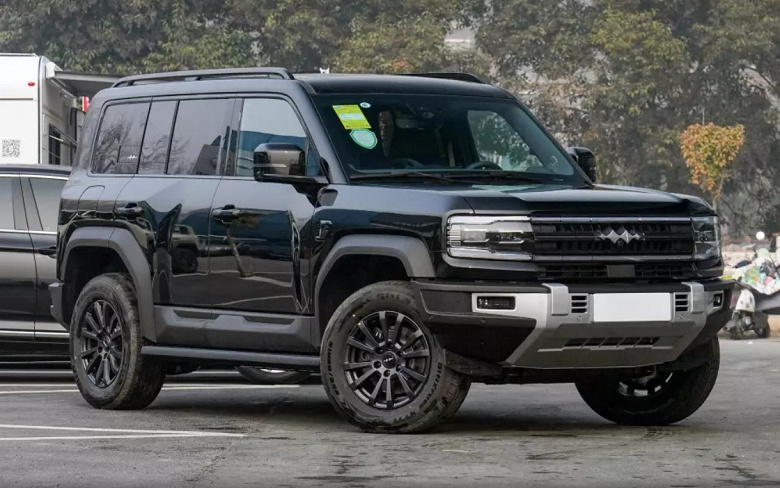
The Leopard 5 still looks the most balanced in terms of power, price and technology if you’re looking for a hybrid SUV rather than a purely electric or diesel car.
Strengths of BYD Leopard 5
To sum up, here is a short list of what makes this model interesting for Ukrainians:
- Electric four-wheel drive with differential locks depending on trim
- Hybrid system with a range of up to 1200 km
- Power at the level of sports cars (687 PS)
- Available DiSus-P suspension and off-road ground clearance
- Interior with modern multimedia and amenities
- Ability to power external devices
- Supplier-dependent financing, servicing and warranty options

How ECOFACTOR helps drivers of hybrids like the BYD Leopard 5
We, ECOFACTOR, are working to make charging electric vehicles and hybrids throughout Ukraine as convenient as filling up a petrol car. And if you’ve already looked at the BYD Leopard 5 hybrid SUV, you’ve probably thought about access to charging infrastructure. This is where our contribution comes in.
The Leopard 5 has a 31.8 kWh battery and supports fast charging, but its standard is Chinese — GB/T. This means that charging at home or at public stations requires compatible equipment. We are taking this into account.
What we offer to BYD Leopard 5 owners
- Charging stations for AC and DC charging: home and commercial equipment; actual charging power is limited by the vehicle and the selected station
- Cables and adapters: in our online store there are adapters and accessories that will help you connect even cars with non-standard connectors
- Public charging stations across Ukraine: Check the app for current locations, availability and compatible connectors
- Map of charging stations: available in the mobile app, where it is easy to find the nearest charging point
- ECOFACTOR app: works on iOS and Android with an intuitive interface and support for the Ukrainian language
- Flexible billing and consumption statistics: through your personal account or directly on your phone
We don’t just sell charging services – we give drivers of BYD, Tesla, Nissan, Hyundai and other brands the chance to use the charging infrastructure stress-free. Current charging prices and applicable terms are shown in the app before a session.
We also develop our own devices – rather than sourcing them from China, we manufacture charging stations in Ukraine, tailored to our local conditions. This is important, particularly when it comes to reliability during periods of unstable power supply or voltage fluctuations.
If you’re already planning to buy a Leopard 5 or another electric car, don’t forget to think about the convenience of charging. In our online store, you can choose a charging station for your home or business, buy cables and adapters, and use the app to find the nearest station and start charging right away. It’s simple and hassle-free.

Conclusion
The BYD Leopard 5 isn’t the sort of hybrid you buy just ‘to drive on electric power’. It’s a car for those who want something powerful, practical, yet high-tech. Its powertrain, well-engineered suspension, comfortable interior and the ability to cover up to 1,200 km without refuelling – all this makes it an attractive option for drivers who aren’t confined to the city.
Infrastructure readiness in Ukraine is also gradually moving towards such models. If you already have a Leopard 5 or are thinking about buying one, check charging compatibility and nearby stations in advance. Charging stations, cables and adapters, an online accessory store, a map of charging points — all this is already available, and we at ECOFACTOR are working to make it even more convenient. Today, the electrification of transport is not the future, but the very real present, and the Leopard 5 fits in well.
Frequently asked questions
Can I charge BYD Leopard 5 on regular chargers in Ukraine?
Chinese-market Leopard 5 models use GB/T connectors. Check the station and vehicle specifications before charging. AC and DC adapters are different: CCS2-to-GB/T fast charging requires a specifically compatible active adapter, not a simple plug converter.
What is the real electric range?
The 31.8 kWh version is quoted at up to 125 km under the CLTC test cycle. This is not a guaranteed real-world range: temperature, speed, terrain, load and battery condition all affect the distance available.
Is Leopard 5 suitable for long journeys?
The Leopard 5 can be suitable for long journeys, with a claimed combined range of up to 1200 km on a full battery and fuel tank for the version discussed here. Actual range varies, so plan fuel and charging stops for the route.
Is it worth buying a charging station for your home?
A compatible home charger can make regular electric driving more convenient if you have a suitable parking space and electrical supply. Compare installation costs, available power and your daily mileage before choosing equipment.
How long does it take to charge at home?
For a 31.8 kWh battery, charging from low to full at around 7 kW takes roughly 5 hours including losses. A lower-power household supply takes longer. The quoted fast-charging time applies to a partial charge at a compatible DC station, not a normal home installation.