

Table of contents:
The Chevrolet Volt is designed for those who want to drive on electric power every day, but without the worry of running out of charge whilst on the road. It is a plug-in hybrid that operates as an electric car most of the time, with the petrol engine stepping in only when needed. That is why the issue of charging the Chevy Volt is key to both comfort and economy.
The good news is that charging the Volt is much easier than it seems. In most cases, a standard socket by your parking space or in your garage is all you need. You don’t need expensive charging stations or complicated equipment to drive on electric power every day. Plug the car in in the evening – and in the morning you’ll have a full range for city driving. In this guide, we’ll look at all the charging options for the Chevrolet Volt, actual battery charging times, costs and practical tips for owners in Ukraine.
We remind you that you can purchase home and commercial charging stations in our online storeand also use the public charging stations ECOFACTORcharging points located throughout Ukraine. For convenient access to charging infrastructure, we recommend using our mobile applicationwhich is available on iOS and Android.
Features: the Chevrolet Volt’s battery and charging system
Before choosing a method for charging the Chevy Volt, it is worth understanding exactly how this car works. The Volt belongs to the plug-in hybrid electric vehicle (PHEV) class, meaning it combines an electric car and a conventional car in a single body. It is equipped with a traction battery for electric driving, an electric motor and a petrol engine, which engages automatically once the battery is depleted. The battery can be charged from external power sources, just like a fully electric vehicle.
The electric range varies depending on the model generation. The first generation typically travels around 60–65 km on electric power alone, whilst the second generation can cover up to 80–85 km. This is more than enough for daily city journeys, so many owners can go weeks without visiting a petrol station. All charging options for the Volt are carried out using alternating current, as the car does not support fast DC charging.
The lack of fast-charging stations here is not a drawback, but part of the concept. The Volt was designed as a transitional option between conventional cars and electric vehicles. If the battery runs out, the car simply switches to petrol and continues its journey without any range limitations. That is precisely why there is no need to look for fast-charging stations during long journeys – the car remains fully functional in any usage scenario.

Home charging methods for the Chevrolet Volt
For most Chevy Volt owners, charging takes place at home. The car is designed to receive its main charge whilst parked overnight, without the need to visit public charging stations regularly. There are several options for home charging – ranging from the simplest to more efficient solutions.
Charging from a regular power outlet (Level 1)
This is the basic and most common method. The car comes with a mobile charging cable that plugs directly into a standard household socket. No installation or special equipment is required.
On Ukrainian 220–230 V charging networks, charging is slightly faster than in countries with a 120 V supply. A full charge cycle usually takes between 8 and 12 hours, with the range increasing by approximately 6–7 km per hour. If you plug the car in in the evening, the battery will be fully charged by morning.
This approach is suitable for most everyday scenarios, particularly when the car is used mainly for city journeys, there is access to a socket near the parking space, the car is left stationary overnight for at least 8 hours, and there is no need for several full charges throughout the day.
Under these circumstances, the standard home charger is more than adequate, which is why many Volt owners use only that and do not install any additional equipment.
Safety when using a domestic socket
The socket must be in good working order and capable of withstanding a continuous load. Before charging regularly, it is advisable to check the following:
- there is a functional earth connection
- The wiring is not old and is not damaged
- The plug does not get hot during use
- A separate power supply circuit, without any other high-power loads, is recommended
If you have any doubts regarding the condition of the electrical installation, it is best to consult an electrician.
Home Station Level 2
If a standard socket isn’t fast enough, you can set up a fixed charging station. It connects to a more powerful power supply and provides a significantly higher current.
In practice, this results in:
- A full charge takes approximately 4–6 hours
- an increase in range of up to 18–20 km per hour
- the option to recharge during the day between journeys
For the Chevrolet Volt, this is the quickest option for home charging, as the car does not support DC charging points.
Installing a Level 2 home charging point makes sense in cases where the car is used extensively during the day and standard overnight charging is no longer sufficient. This is particularly relevant if several charging cycles are required per day, the car is used for work or regular journeys, or if you are planning to switch to a fully electric car in the future.
For typical urban use, such a station is not essential, but it significantly improves convenience and allows you to recharge your vehicle more quickly between journeys.
Charging from CEE power sockets
Another option for private homes or garages is to use CEE-type power sockets. These are rated for a higher current than standard domestic sockets, so they allow you to charge your car more quickly without having to install a full-scale charging station.
The most common sockets are blue ones rated up to approximately 16 A and red ones, which can handle 32 A or more. To connect a car in this case, you will need a compatible charging cable designed specifically for this type of socket.
Advantages.
- cheaper than installing fixed stations
- faster than a standard domestic socket
- designed for continuous use
- ideal for garages and private homes
Disadvantages.
- require professional installation
- not available everywhere
- A compatible cable must be purchased separately
Ultimately, most Chevrolet Volt owners can meet all their charging needs at home. The choice of a particular model depends not so much on the car itself as on the owner’s lifestyle, the availability of the mains supply and how frequently the car is used.
Public charging stations
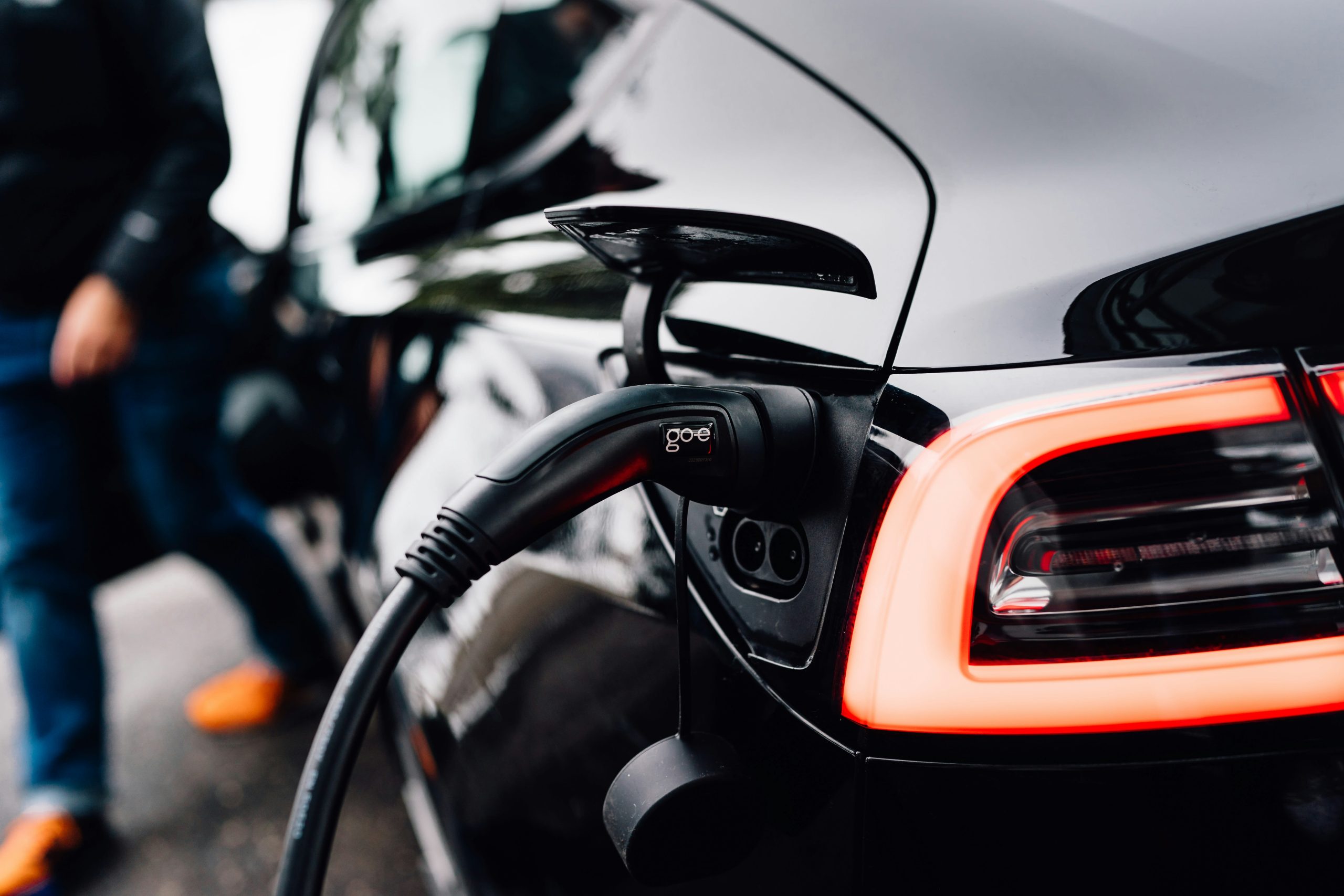
Charging away from home is a useful addition to everyday car use, but for the Chevrolet Volt it is not absolutely essential. Most public charging stations compatible with this model operate on AC Level 2, meaning they provide standard fast charging using alternating current. Such charging points are quite common in towns and cities and are usually located near shopping centres, in business centre car parks, at hotels, in office car parks and next to restaurants, where the car can be left stationary for a certain period of time.
Usually, you need:
- Connect the cable to the car
- Activate the station via the app or your card
- Mind your own business
The Volt charges more slowly than modern electric vehicles, but it’s enough for a quick stop.
Interestingly, many businesses offer free charging to attract visitors.

ECOFACTOR: a solution for convenient Chevy Volt charging in Ukraine
Here at ECOFACTOR, we understand that Chevrolet Volt owners choose this car for the ability to drive on electric power every day without the need for complex infrastructure. That is why we develop solutions that make charging the Chevy Volt simple and accessible in familiar places – at home, at work or whilst travelling around town.
Our company develops, manufactures and maintains charging stations in Ukraine, offering equipment for both private and business use – ranging from mobile chargers to fixed AC and DC solutions. All devices comply with industry standards and are designed for reliable, day-to-day operation.
A single ecosystem for charging at home and on the go
We don’t just provide equipment. ECOFACTOR offers a complete range of solutions – from the installation of charging stations and platforms for operators to a mobile app for drivers. Appendix. Available at iOS and Android and features an interactive map of charging stations across Ukraine. You can use it to find the nearest charging point, check its availability in real time and plan your route, taking charging costs into account. This is particularly convenient for Volt owners who combine electric journeys around town with longer journeys.
Online store of charging equipment and accessories
Our online shop plays a special role, offering a range of chargers for home and business use, as well as cables, adaptors and other accessories for everyday use. Here you can find solutions compatible with the Chevrolet Volt, without having to search for components in different places. Reliable charging stations and the right accessories ensure that charging your Chevy Volt is safe, stable and predictable in all conditions.
Community and infrastructure development
We are also working to develop electric car infrastructure and support the community of drivers across the country. Through our app, users can leave reviews of charging points, share their experiences and receive up-to-date information on the operation of the networks. We firmly believe that convenient charging is not a standalone service, but a fundamental requirement for the everyday use of electric vehicles, including models such as the Chevrolet Volt.
How much does it cost to charge a Chevy Volt?
The cost of charging a Chevy Volt depends primarily on electricity tariffs, but even at current prices it is usually several times lower than the cost of petrol. The Volt’s battery capacity is approximately 16–18 kWh, depending on the generation; however, in real-world use, a full charge from the mains usually requires around 12–14 kWh due to losses during charging.
In Ukraine, with a domestic electricity tariff of around 4.32 UAH per kWh, a full home charge will cost approximately 50–65 UAH. If you use the night-time tariff on a dual-rate meter, the cost can be reduced by almost half. This charge is sufficient for approximately 60–85 km of electric range, meaning the cost per kilometre is very low compared to any petrol car.
Several practical factors influence actual running costs: the regional electricity tariff, the availability of a night-time rate, the frequency of recharging, and driving style, which determines the actual range. It is most cost-effective to charge the Volt at night, when electricity is cheaper and the load on the grid is at its lowest. Even without a special tariff, daily electric driving is usually cheaper than a single trip to the petrol station.
How to organise daily charging of a Chevy Volt
The Chevrolet Volt really comes into its own when charging becomes a natural part of your daily routine, rather than a separate task. Thanks to its hybrid system, the car does not rely heavily on the infrastructure, but organising charging correctly allows you to make the most of electric mode and use almost no petrol.
The ideal scenario for daily use
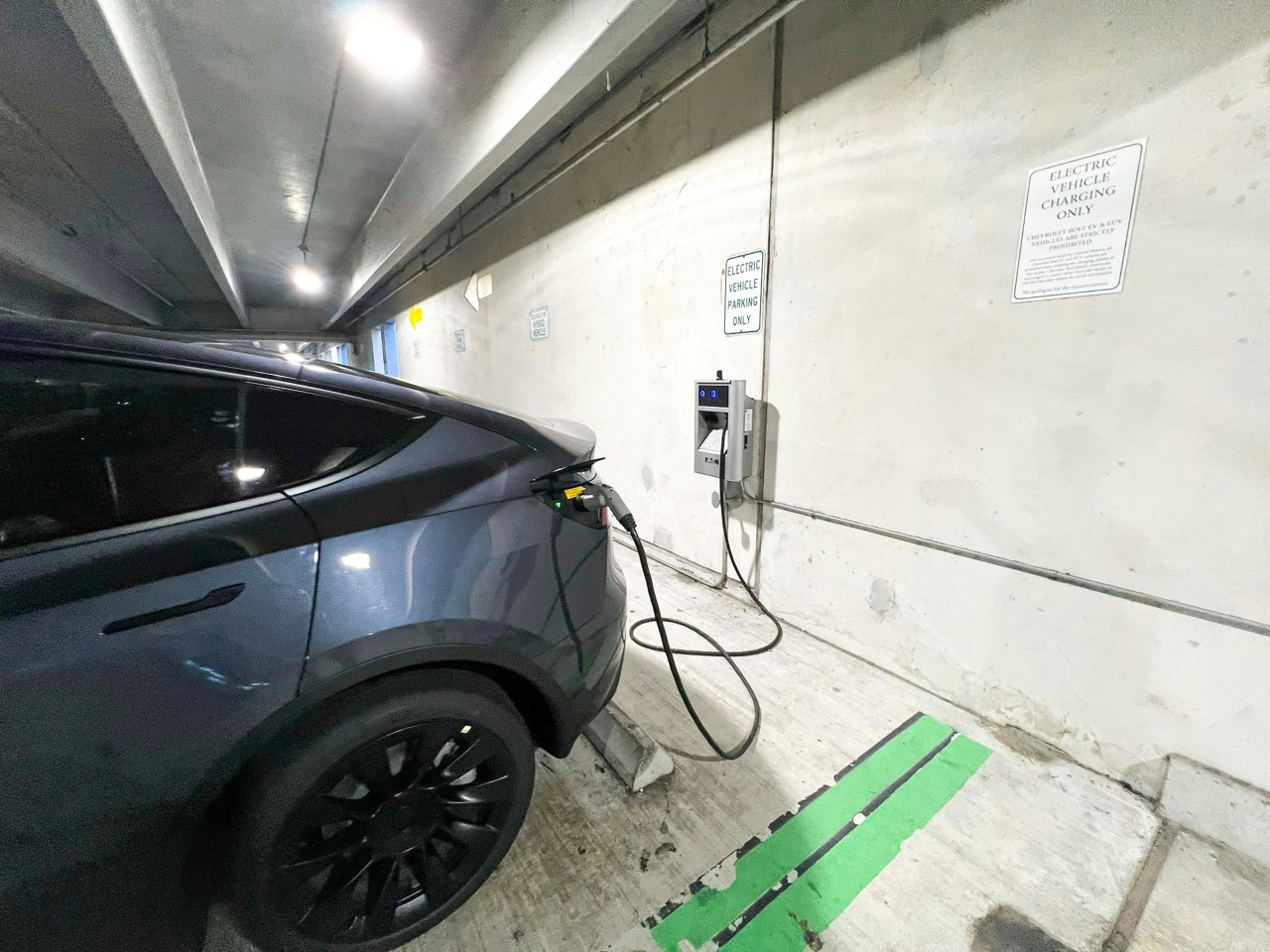
In most cases, the most convenient arrangement is quite straightforward. Most of the charging takes place at home overnight, whilst the car is stationary, and if necessary, you can top up at work or whilst travelling around town. The petrol engine is then used mainly for long-distance journeys.
With this approach, the car starts each morning with a fully charged battery, and its electric range is sufficient for all everyday tasks. As a result, many owners only need to visit a petrol station from time to time.
Is it essential to have a domestic socket?
Home charging makes life much easier, but it is not absolutely essential. Without access to its own charging point, the Volt will effectively operate as a conventional hybrid and will rely more heavily on petrol. At the same time, thanks to its backup engine, the car remains fully functional and does not restrict the driver’s mobility.
Many car owners successfully charge their cars at alternative locations, such as in the car park at work, in the courtyard of a block of flats, in shopping centre car parks or in garage cooperatives. This approach is less convenient, but perfectly viable, especially if there is a fixed location for regular recharging.
Practical tips for trouble-free use
There are a few simple rules to help ensure that charging your Chevy Volt is as efficient and safe as possible:
- Plug your car in whenever you can
- Do not let the battery run completely flat unless necessary
- Take advantage of night-time electricity tariffs
- Check the condition of the wiring before charging as normal
- Keep cables and sockets away from moisture
- Check the temperature of the connection from time to time
The Volt copes well with frequent recharging, so there’s no need to wait until the battery is almost flat. On the contrary, short, regular charging sessions make using the car more predictable and economical.
Conclusion
The Chevrolet Volt is designed to make the transition to electric driving as simple and hassle-free as possible. You don’t need to adapt to the infrastructure or make any drastic changes to your habits. In most cases, a standard socket near your parking space is all you need to drive on electric power every day and hardly give petrol a second thought. This is precisely where the Volt’s main advantage over fully electric cars lies.
Properly organised Chevy Volt charging allows you to get the most out of this model. If you charge the car regularly, make use of overnight charging and avoid letting the battery run completely flat unnecessarily, running costs are kept to a minimum and the convenience of day-to-day use is significantly enhanced. The Volt doesn’t require complicated solutions, but it responds very well to a well-thought-out approach.
All in all, this car remains one of the most convenient options for city driving, particularly in areas where the charging infrastructure is developing unevenly. It allows you to enjoy the benefits of electric transport today, without being entirely dependent on charging stations and without worrying about your driving range.
Frequently asked questions
1. Do you have to charge the Chevrolet Volt every day?
No, it isn’t essential. The car can still run without regular charging, switching to the petrol engine once the battery is flat. However, charging it every day allows you to make the most of electric driving and significantly reduces fuel costs.
2. Is it safe to charge the Volt from a standard socket?
Yes, provided that the socket is in good working order, is earthed and is rated for a continuous load. It is also advisable to check that the wiring is not old and does not overheat during use. In most cases, a standard domestic mains supply is perfectly suitable for this car.
3. Can you leave your car plugged in all night?
Yes, you can. Once the battery is fully charged, the system automatically cuts off the power supply, so there is no risk of overcharging. Overnight charging is considered the most convenient and economical option for everyday use.
4. Does the Volt support fast charging on the motorway?
No, this model does not support DC fast-charging stations. It can only be charged using alternating current. A petrol engine is used for long journeys, so the lack of fast-charging facilities does not restrict travel.
5. Is there any point in installing a home station if there’s a standard socket?
It depends on how intensively the car is used. If the Volt is used only for city driving and has enough time to charge overnight, a standard socket is sufficient. A home charging station comes in handy when you need to top up the charge quickly between journeys or if the car is used very intensively.